


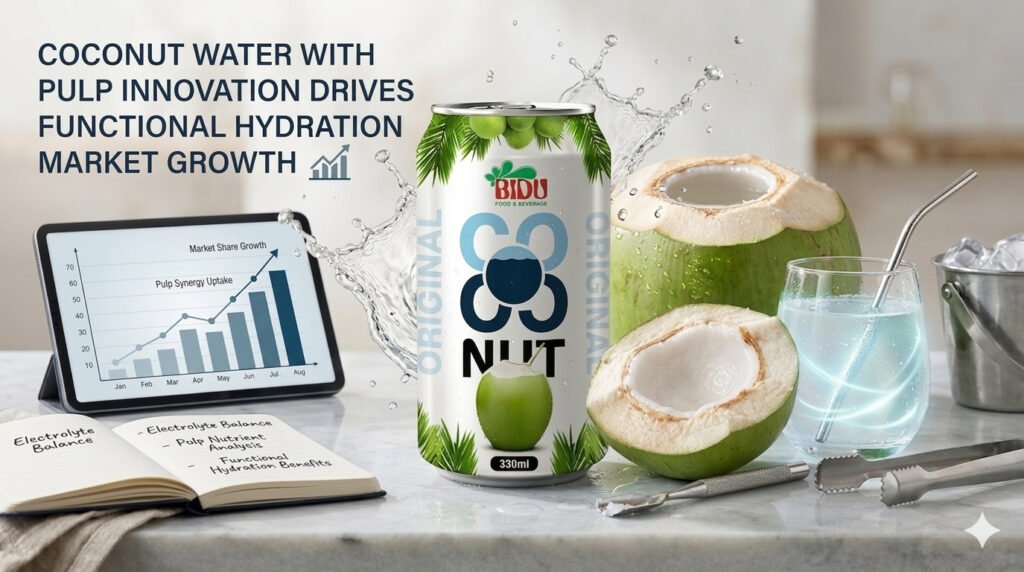
The functional hydration market is experiencing a paradigm shift as consumers demand more than just refreshment. Coconut water with pulp has emerged as a groundbreaking innovation, offering a unique textural experience that combines hydration with natural fiber. This trend is reshaping product development strategies for OEM manufacturers and creating new opportunities for B2B buyers.
As the global beverage industry pivots towards authenticity and functionality, understanding the dynamics of this segment becomes crucial for stakeholders aiming to capture market share in the rapidly evolving functional water category.
Contents
- 1 Hot Topic Analysis: The Rise of Pulp-Included Coconut Water
- 2 Product Case Study: 330ml Bidu Coconut Water with Pulp
- 3 Market Impact: Consumer Demand for Textural Complexity
- 4 Business Strategy: OEM Opportunities in Functional Hydration
- 5 Expert Perspective: Industry Leaders on Texture Innovation
- 6 Future Outlook: 2025-2030 Forecast for Pulp-Included Coconut Water
- 7 Frequently Asked Questions
- 7.1 1. What is driving the demand for pulp-included coconut water?
- 7.2 2. How can OEM manufacturers help brands enter this segment?
- 7.3 3. What are the key challenges in producing coconut water with pulp?
- 7.4 4. Which markets offer the best opportunities for this product?
- 7.5 5. How does pulp inclusion affect the product’s shelf life?
- 7.6 6. What is the recommended MOQ for OEM production?
Hot Topic Analysis: The Rise of Pulp-Included Coconut Water
The global functional hydration market is undergoing a transformation, with coconut water emerging as a leading segment. Consumers increasingly demand products that offer both hydration and textural experience. The inclusion of natural coconut pulp represents a significant innovation in this space, bridging the gap between traditional beverages and functional foods. This trend is reshaping how manufacturers approach product development.
Market data from 2023 indicates that the functional water category grew by 12% year-over-year, with coconut water variants capturing a substantial share. The addition of pulp not only enhances nutritional value but also creates a unique mouthfeel that appeals to health-conscious consumers. This development signals a shift towards more authentic, minimally processed beverage options.
Product Case Study: 330ml Bidu Coconut Water with Pulp
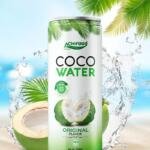
The 330ml Bidu Coconut Water with Pulp exemplifies this innovation. This product combines pure coconut water with natural pulp, offering a dual-texture experience that sets it apart from standard offerings. The inclusion of pulp provides additional fiber and a more satiating drinking experience, aligning with consumer preferences for functional beverages.
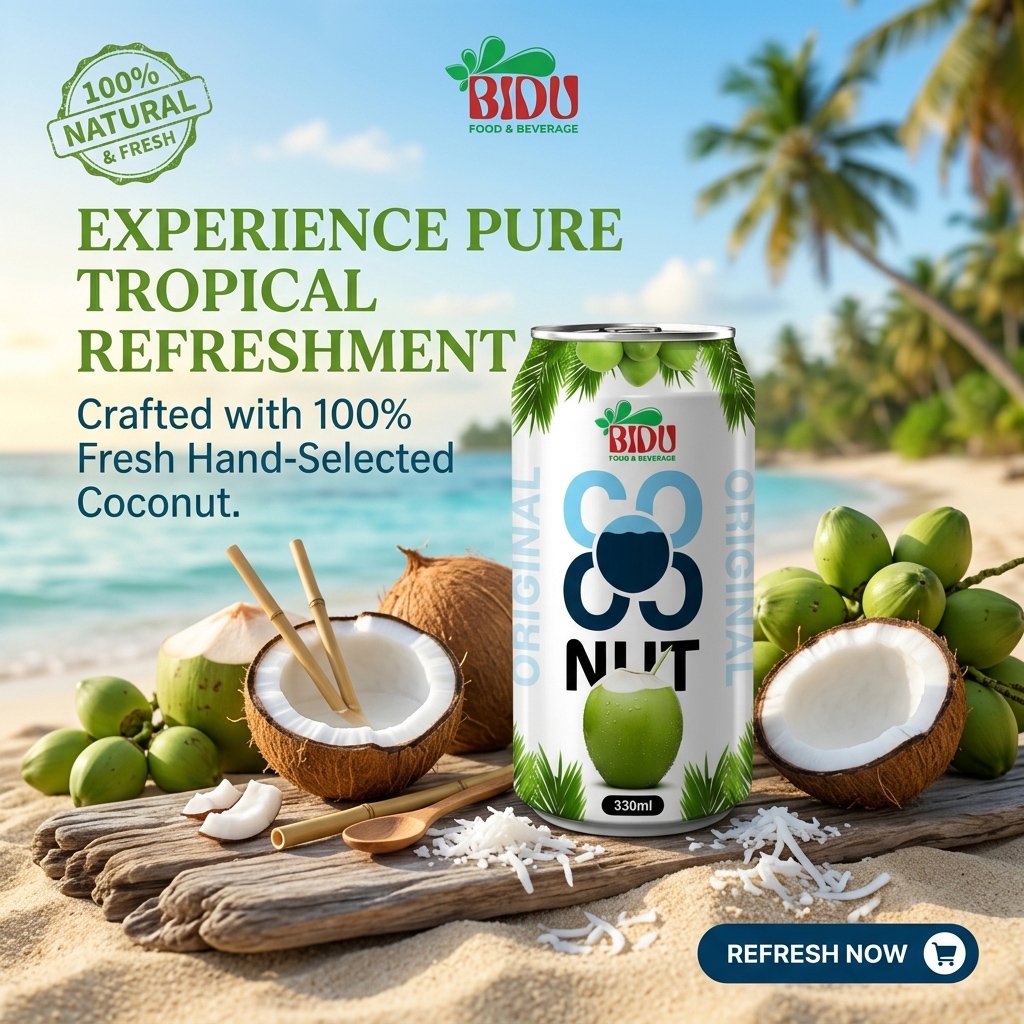
Manufacturers focusing on coconut water with pulp products can leverage this trend to differentiate their portfolios. The product’s 330ml can format is ideal for on-the-go consumption, a key driver in the RTD segment. This case study demonstrates how texture innovation can create a competitive advantage in a crowded market.
Market Impact: Consumer Demand for Textural Complexity
Consumer behavior research reveals a growing preference for beverages with added texture. Products like Bidu coconut water with pulp cater to this demand, offering a more engaging sensory experience. This trend is particularly strong in Asia-Pacific and North America, where functional beverages are mainstream.
The global coconut water market is projected to reach $12 billion by 2028, with pulp-included variants expected to capture a 15% share. Distributors seeking to capitalize on this growth should consider fresh coconut water options that incorporate natural ingredients. The convergence of hydration and texture is a key driver of market expansion.
Business Strategy: OEM Opportunities in Functional Hydration
For B2B buyers, partnering with OEM manufacturers offers a strategic pathway to enter the pulp-included coconut water segment. OEM flexibility allows for customized formulations, packaging sizes, and private labeling. This approach reduces time-to-market and enables brands to test new concepts with lower risk.
Manufacturers with expertise in aseptic processing and pulp incorporation are particularly valuable. The ability to scale production while maintaining product integrity is a critical success factor. Companies exploring milk drink alternatives can apply similar processing techniques to coconut water innovations.
Strategic partnerships with OEMs also facilitate access to emerging markets. Export opportunities in the Middle East and Europe are expanding, driven by demand for natural, functional beverages. Distributors should evaluate potential partners based on their certification and quality control capabilities.
Expert Perspective: Industry Leaders on Texture Innovation
Dr. Maria Chen, a beverage scientist at the Institute of Food Technologists, notes that texture is becoming a critical differentiator in the RTD market. ‘Consumers are seeking multisensory experiences. The inclusion of pulp in coconut water is a prime example of how texture can elevate a product from commodity to premium,’ she explains.
Market analyst John Park from Beverage Insights adds that the trend towards pulp-included beverages aligns with the clean label movement. ‘Natural ingredients and minimal processing are non-negotiable for today’s consumers. Products that deliver on both taste and transparency will win,’ he states.
For manufacturers, investing in R&D for texture optimization is essential. The balance between pulp content and drinkability must be carefully calibrated to ensure consumer acceptance. Expert guidance can help avoid common pitfalls in product development.
Future Outlook: 2025-2030 Forecast for Pulp-Included Coconut Water
The next five years will see accelerated adoption of pulp-included coconut water across multiple regions. North America and Europe are expected to lead in premium product launches, while Asia-Pacific will drive volume growth. Innovations in packaging, such as resealable cans and eco-friendly materials, will further boost market penetration.
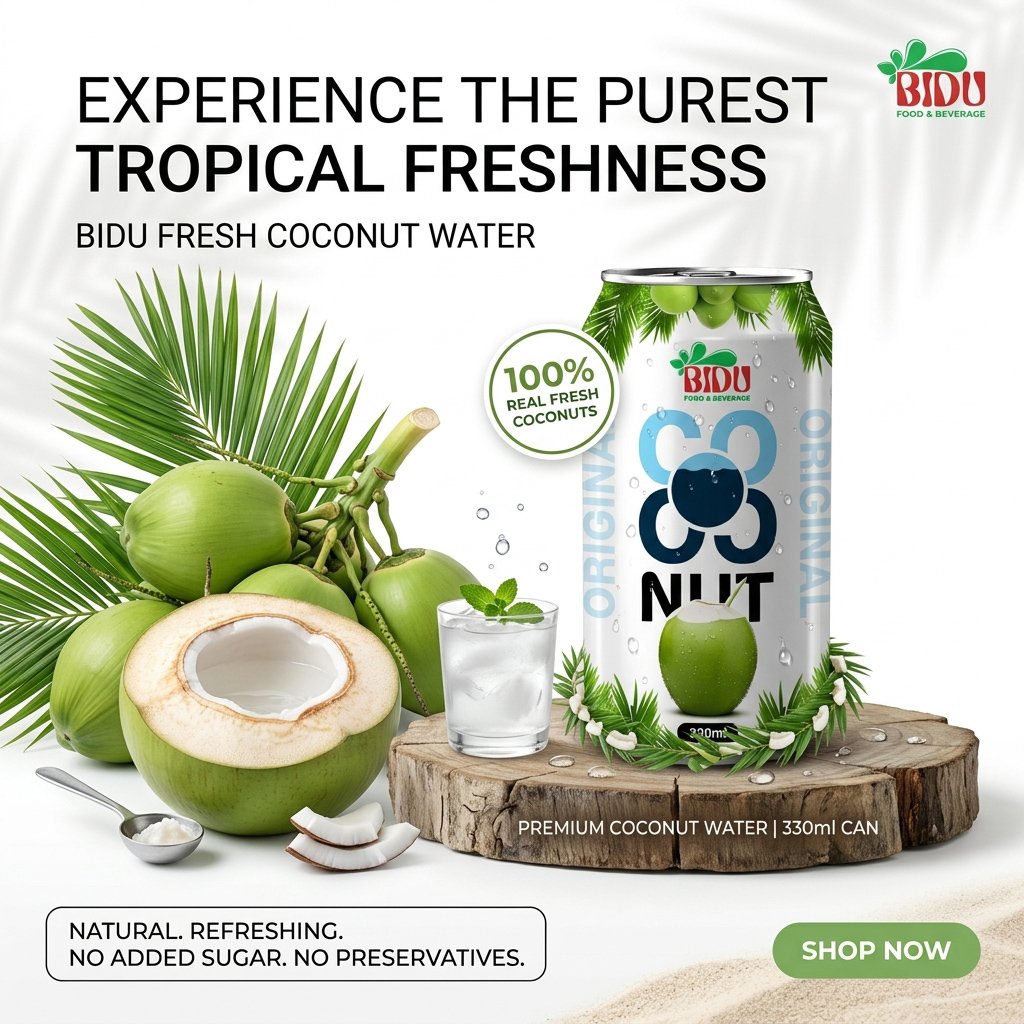
Technological advancements in aseptic processing will enable longer shelf life without preservatives, a key requirement for export markets. The integration of functional ingredients like electrolytes and vitamins will create new product subcategories. Industry projections suggest that pulp-included variants could account for 25% of the coconut water market by 2030.
For businesses, the strategic imperative is clear: invest in texture innovation now to capture early-mover advantages. Partnering with experienced OEMs can accelerate product development and market entry. The future of hydration is textured, functional, and natural.
Frequently Asked Questions
1. What is driving the demand for pulp-included coconut water?
Consumer desire for authentic, texturally rich beverages is the primary driver. Health trends favoring natural fiber and minimal processing also contribute. Market data shows a 20% annual growth rate for pulp-included variants.
2. How can OEM manufacturers help brands enter this segment?
OEMs provide turnkey solutions including formulation, processing, and packaging. They enable brands to launch products quickly with lower capital investment. Partnering with an experienced OEM reduces time-to-market by up to 50%.
3. What are the key challenges in producing coconut water with pulp?
Maintaining pulp stability and preventing sedimentation are technical challenges. Aseptic processing and proper homogenization are critical. Quality control measures must ensure consistent texture across batches.
4. Which markets offer the best opportunities for this product?
Asia-Pacific, North America, and the Middle East are top markets. The US functional beverage market alone is expected to grow by 8% annually. Export opportunities are strong in regions with high coconut water consumption.
5. How does pulp inclusion affect the product’s shelf life?
Proper processing can achieve a shelf life of 12-18 months without preservatives. Aseptic packaging and cold chain logistics are recommended. The natural antioxidants in coconut pulp also help preserve freshness.
6. What is the recommended MOQ for OEM production?
Typical MOQs range from 10,000 to 50,000 units per SKU, depending on packaging complexity. Many OEMs offer flexible MOQs for trial runs. This allows brands to test the market before scaling up.