


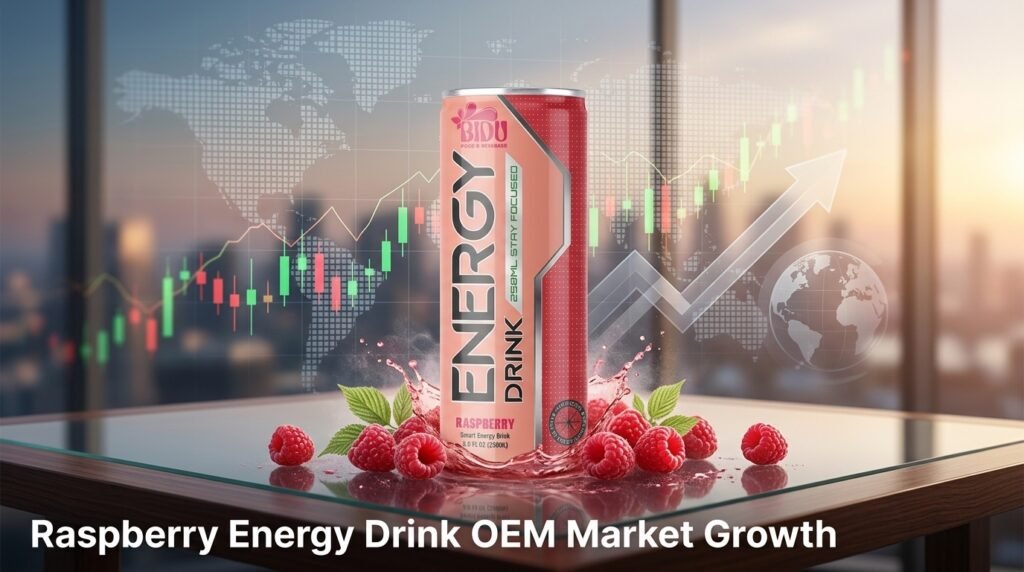
Flavor innovation has become a defining force in the global functional beverage sector, with energy drinks leading the charge. The traditional reliance on classic citrus profiles is giving way to a wave of bold, fruit-forward options that resonate with adventurous consumers. Among these, the raspberry energy drink segment has emerged as a standout, combining familiar sweetness with tangy notes that appeal to both millennial and Gen Z demographics. This shift is not merely a fleeting trend but a structural change in how brands approach product differentiation and market expansion.
For original equipment manufacturers (OEMs), this flavor dynamism represents a powerful opportunity to capture value through customization. The ability to offer a 250ml can energy drink with raspberry flavor as a private label solution allows distributors to bypass lengthy R&D cycles and respond quickly to consumer demand. The strategic importance of flavor innovation in energy drinks cannot be overstated, as it directly impacts shelf presence, repeat purchases, and brand loyalty in a highly competitive category.
Contents
- 1 The Rise of Flavor Innovation in the Energy Drink Market
- 2 OEM Flexibility A Catalyst for Rapid Product Deployment
- 3 The Strategic Advantage of Vietnamese Manufacturing for Energy Drinks
- 4 Market Opportunities for Distributors and Importers
- 5 Frequently Asked Questions
- 5.1 What makes raspberry a popular flavor for energy drinks?
- 5.2 How does OEM manufacturing reduce time to market for new energy drink brands?
- 5.3 What certifications should an energy drink OEM have for global export?
- 5.4 Can the 250ml energy drink can format be adapted for different markets?
- 5.5 What is the typical minimum order quantity for private label energy drinks?
- 5.6 How do Vietnamese OEM suppliers compare to Chinese in terms of cost and quality?
The Rise of Flavor Innovation in the Energy Drink Market
Consumer preferences in the energy drink market have evolved dramatically over the past five years, with flavor variety emerging as a top purchase driver. According to industry data, over 40% of energy drink consumers cite exciting new flavors as a key reason for trying a brand, surpassing even caffeine content in some demographics. The raspberry energy drink category has particularly benefited from this trend, as its vibrant color and balanced taste profile make it suitable for both core energy users and casual consumers seeking a refreshing pick-me-up.
The global energy drink market, valued at over $60 billion in 2024, continues to expand at a compound annual growth rate of 7-8%, with the Asia-Pacific region accounting for a significant share. Within this landscape, flavor innovation acts as a wedge for new entrants to carve out niche positions. A 250ml can format is especially popular in Asia, where portion control and portability are valued. The 250ml cans energy drink raspberry flavour from OEM suppliers like ACM FOOD offers a ready-to-market solution that can be tailored to local taste preferences without sacrificing speed to market.
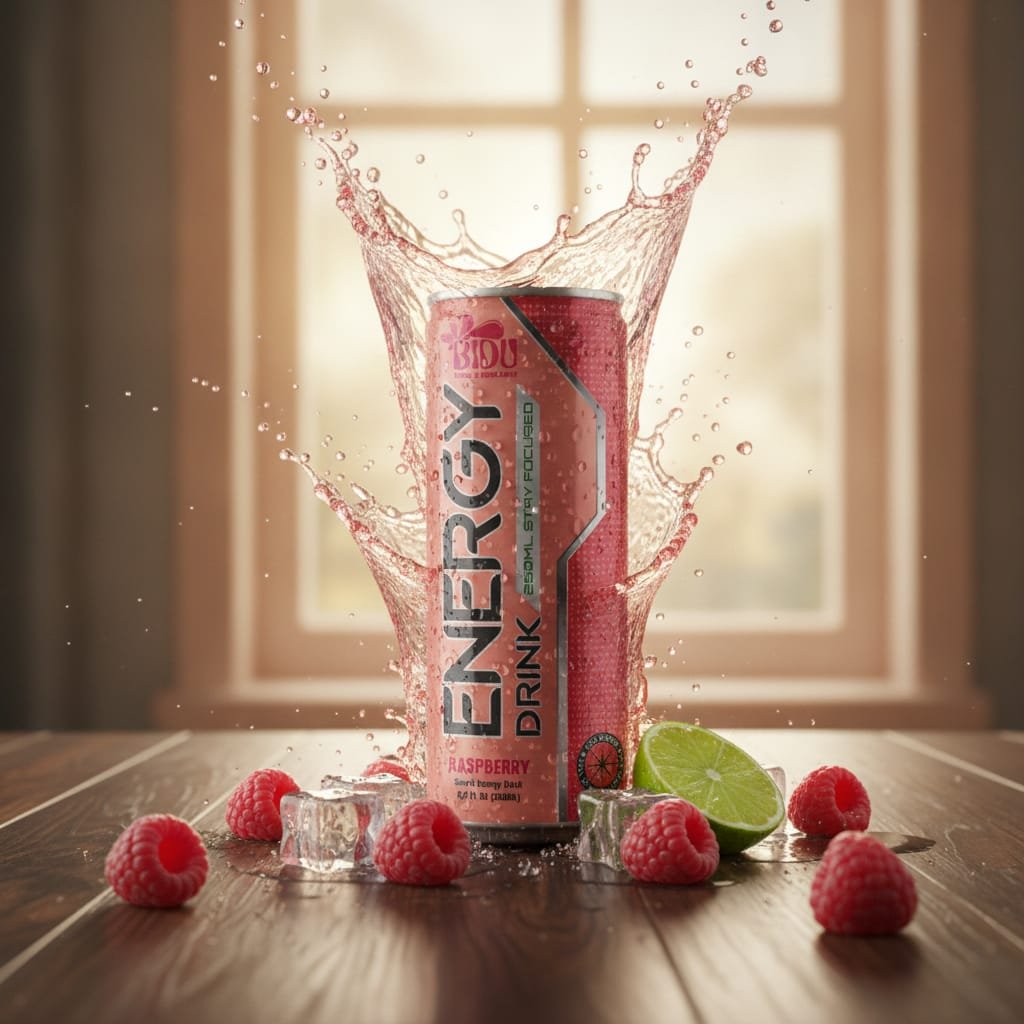
Raspberry energy drink can with fresh fruit garnish
Why Raspberry Stands Out Among Energy Drink Flavors
Raspberry offers a unique combination of sweetness and tartness that masks the bitterness of caffeine and taurine, making it a versatile base for functional formulations. Unlike citrus flavors, which can sometimes clash with energy drink ingredients, raspberry provides a smooth finish that enhances drinkability. This has led to its adoption in both high-sugar and sugar-free variants, catering to health-conscious consumers without compromising on taste.
For OEM partners, the flexibility to adjust sweetness levels, carbonation, and functional ingredient blends around a raspberry flavor profile is a significant advantage. The Raspberry Energy Drink Wholesale – 250ml Can OEM Supplier model allows brands to test the market with minimal financial risk, as MOQs can be tailored to pilot runs. This approach is particularly attractive for startups and regional distributors looking to establish a foothold in the competitive energy drink space.
OEM Flexibility A Catalyst for Rapid Product Deployment
The OEM model has revolutionized the beverage industry by enabling companies to launch new products without investing in manufacturing infrastructure. In the energy drink segment, where speed to market is critical to capitalize on trends, OEM partners provide the agility needed to stay ahead. Vietnamese manufacturers like ACM FOOD have leveraged modern production lines and deep ingredient sourcing networks to offer OEM solutions that combine cost efficiency with quality assurance.
One of the most compelling aspects of the OEM approach is the ability to customize not only flavor but also packaging format, labeling, and branding. The raspberry energy drink in 250ml cans can be adapted into slim cans, sleek cans, or even PET bottles depending on target market requirements. This adaptability is critical for distributors who serve multiple regions with distinct packaging preferences, such as Europe favoring sleek cans and Southeast Asia preferring standard 250ml cans.
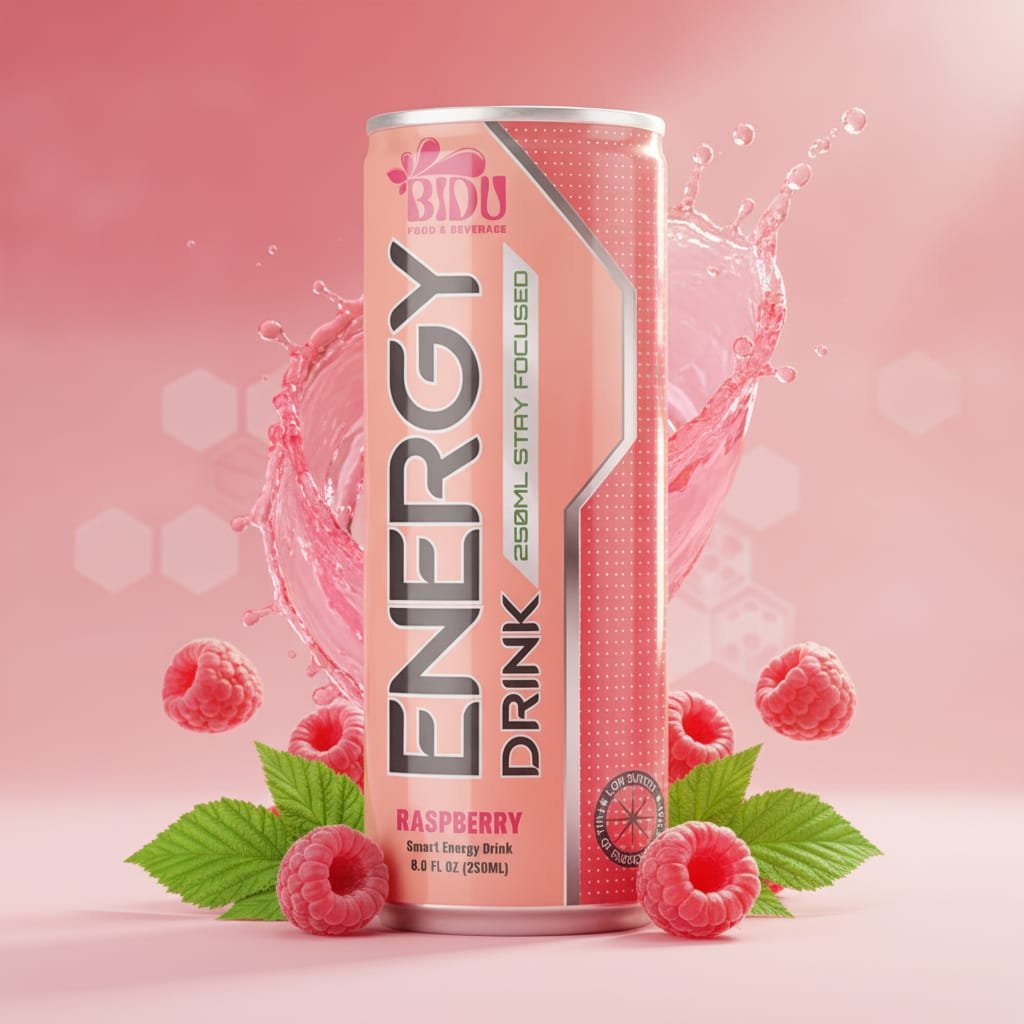
Efficient OEM canning line for energy drinks
For illustrative purposes only
Low MOQ and Private Label Services Open Doors for New Brands
Traditional energy drink manufacturing often requires large minimum order quantities that lock out smaller players. However, OEM suppliers focused on flexibility have reduced MOQs to as low as a few thousand cases, enabling niche brands to compete. Private label services further lower the barrier, allowing companies to use existing formulations and simply apply their own brand and artwork. This has spurred a wave of micro-brands that cater to local tastes, such as natural ingredient-focused energy drinks in the Middle East or halal-certified variants in Indonesia.
Manufacturers like BIDU Trading and Service Co., Ltd., a brand of ACM FOOD, offer comprehensive private label programs that cover everything from concept to export documentation. Such turnkey solutions are invaluable for importers who lack technical expertise but understand their local market’s flavor and regulatory demands. The energy drink OEM category from ACM FOOD exemplifies how standard offerings can be customized efficiently.
The Strategic Advantage of Vietnamese Manufacturing for Energy Drinks
Vietnam has emerged as a manufacturing hub for beverages, thanks to its competitive labor costs, robust supply chain for tropical ingredients, and free trade agreements with major markets. ACM FOOD operates a factory in Tan Phu Trung Industrial Park near Ho Chi Minh City, equipped with over 10 automated production lines and a monthly capacity exceeding 300 containers. This scale ensures consistent quality and on-time delivery for global clients.
The facility holds FSSC 22000, ISO, BSCI, HALAL, and KOSHER certifications, making it a reliable partner for exports to the United States, Europe, the Middle East, and Asia. For energy drink brands, these certifications are non-negotiable; they assure retailers and consumers that the product meets stringent food safety and religious standards. The ability to source a certified energy drink from Vietnam reduces lead times compared to sourcing from China or India, as Vietnam’s customs procedures have been streamlined for manufactured goods.
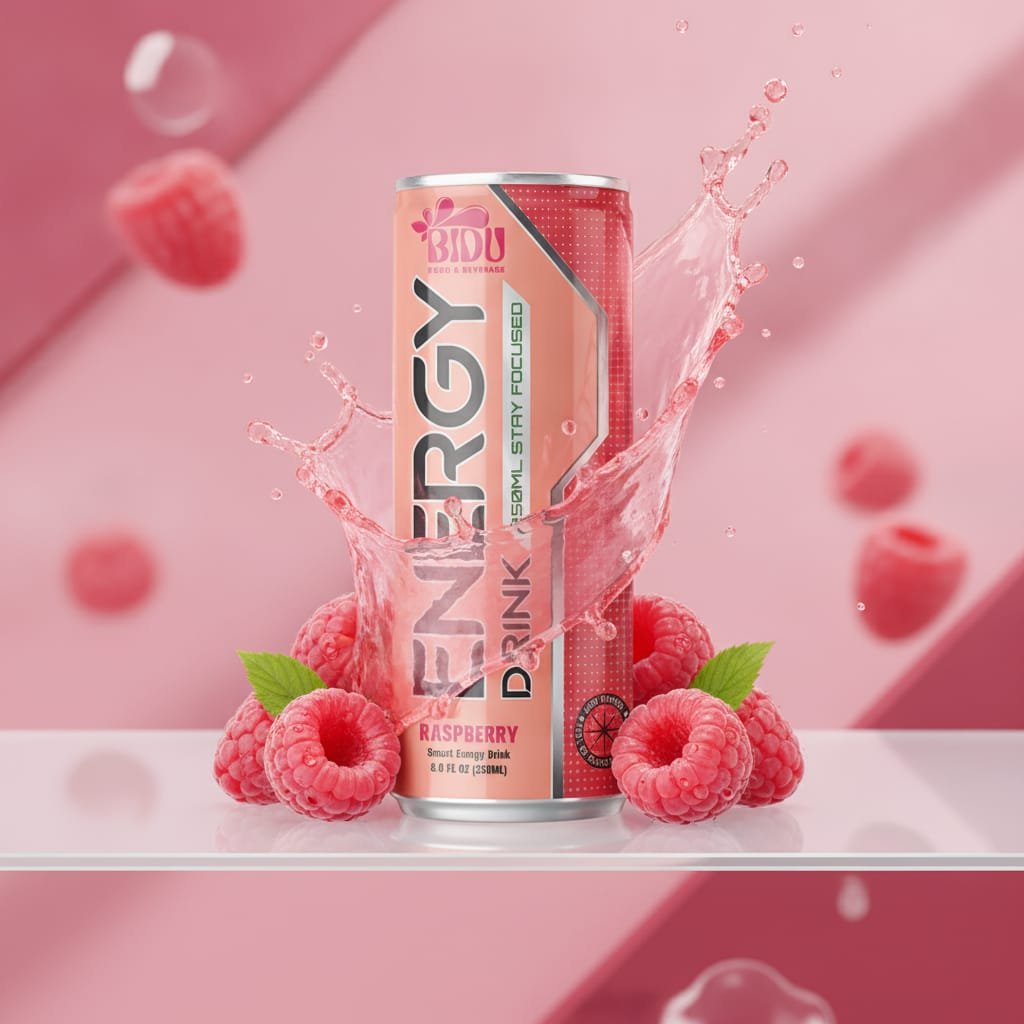
Shelf-ready raspberry energy drink for retail
Supply Chain Resilience and Export Logistics
Recent global disruptions have underscored the importance of supply chain resilience. Vietnamese manufacturers have invested in warehouse management systems and long-term contracts with shipping lines to ensure export continuity. ACM FOOD’s export logistics team manages documentation for each target market, including ingredient declarations, health certificates, and tariff classifications. This service is particularly vital for energy drinks, which occasionally face scrutiny over caffeine levels and additive lists.
Distributors exploring OEM partnerships should evaluate a supplier’s track record of regulatory compliance. For example, energy drinks destined for the EU must comply with novel food regulations, while those for the US need FDA notifications for added ingredients. A experienced OEM partner will provide guidance on formulation adjustments to meet these requirements, turning a potential hurdle into a competitive advantage.
Market Opportunities for Distributors and Importers
The global thirst for functional beverages shows no sign of abating, and energy drinks remain a high-growth category. For distributors, adding a raspberry energy drink to their portfolio can attract younger consumers and fill a gap in the fruit-flavor segment. The key is to partner with an OEM that offers not only product flexibility but also scalability as demand grows.
For importers looking to differentiate, consider launching a limited-edition raspberry flavor tied to seasonal promotions. The OEM model allows for such short-run production without long-term commitment. Alternatively, a premium positioning using natural flavors and organic certifications can command higher margins in developed markets. The supplier’s ability to provide organic and clean-label versions of the energy drink is a significant value-add.
As the energy drink market matures, flavor innovation will continue to be a primary growth lever. Companies that act now to secure an agile OEM partner like ACM FOOD or BIDU will be best positioned to capture emerging demand. The question is no longer whether to pursue flavor innovation, but how fast your supply chain can respond to the next consumer craving.
Frequently Asked Questions
What makes raspberry a popular flavor for energy drinks?
Raspberry offers a natural sweetness with a tangy profile that masks bitter functional ingredients, making it highly drinkable across demographics. Its vibrant color also adds visual appeal on store shelves.
How does OEM manufacturing reduce time to market for new energy drink brands?
OEM suppliers provide pre-developed formulations and flexible packaging options, allowing brands to launch within weeks rather than months. Customization of labeling and branding is handled directly by the manufacturer, streamlining the entire process.
What certifications should an energy drink OEM have for global export?
Critical certifications include FSSC 22000 or ISO 22000 for food safety, HALAL for Middle Eastern markets, and KOSHER for Jewish consumers. BSCI certification is often required by European retailers to ensure ethical labor practices.
Can the 250ml energy drink can format be adapted for different markets?
Yes, OEM suppliers can produce the same beverage in slim cans, sleek cans, or PET bottles. The 250ml size is particularly popular in Asia and parts of Europe for its portability and portion control.
What is the typical minimum order quantity for private label energy drinks?
MOQs vary by manufacturer but can be as low as a few thousand cases from flexible OEM partners like ACM FOOD. This allows small and medium-sized distributors to test the market investment.
How do Vietnamese OEM suppliers compare to Chinese in terms of cost and quality?
Vietnam offers competitive labor costs with more favorable trade agreements to the US and EU, while maintaining high quality through modern machinery and international certifications. Lead times are often shorter due to less congestion at ports.