


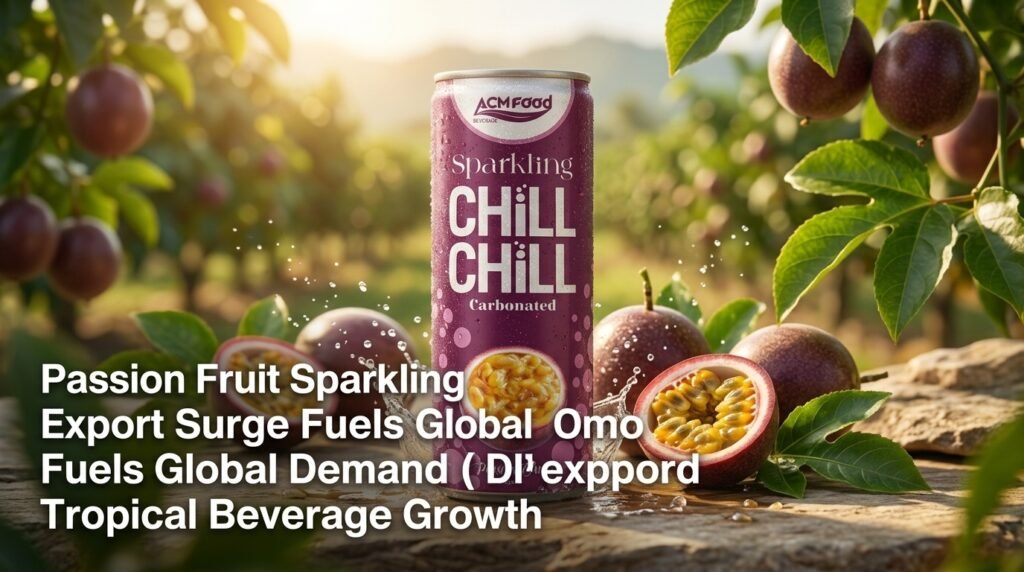
The global beverage industry is witnessing a paradigm shift as tropical sparkling juices carve out a dominant niche in the ready-to-drink segment. Sparkling passion fruit varieties, in particular, are leading this charge, combining exotic flavor profiles with the growing consumer preference for lightly carbonated, natural refreshments. Export volumes from Southeast Asian manufacturing hubs have surged, reflecting a structural change in how international brands source their private label offerings. This movement is not merely a trend but a fundamental realignment of supply chains toward agile OEM partners.
For distributors, importers, and retail chains evaluating their next category expansion, understanding the dynamics behind this export wave is crucial. The intersection of tropical fruit innovation, flexible OEM production, and streamlined export logistics now defines competitive advantage in the non-alcoholic beverage space. Brands that leverage these factors can capture rising demand across North America, Europe, and the Middle East, where passion fruit-infused sparkling drinks are gaining rapid traction on supermarket shelves.
Contents
- 1 Global Thirst for Tropical Sparkling Juices
- 2 Vietnam’s Emergence as a Beverage Export Hub
- 3 Export Logistics and Supply Chain Advantages
- 4 Strategic Considerations for Global Distributors
- 5 Frequently Asked Questions
- 5.1 What is driving the global demand for tropical sparkling juices like passion fruit?
- 5.2 How does Vietnam’s OEM beverage manufacturing compare to other Asian sourcing destinations?
- 5.3 What certifications are typically required for exporting passion fruit sparkling juice to the US or EU?
- 5.4 Can private label buyers customize the sugar content or use natural sweeteners in sparkling juice OEM production?
- 5.5 What are the typical MOQ and lead times for 250ml can exports from Vietnam?
- 5.6 How does the 250ml can format benefit international distributors compared to other packaging formats?
- 5.7 What logistical challenges should importers anticipate when sourcing sparkling juices from Vietnam?
Global Thirst for Tropical Sparkling Juices
The global sparkling juice market is projected to grow at a compound annual rate of over 12% through 2030, with tropical flavors accounting for a significant share. Passion fruit, with its distinctive tart-sweet taste and vibrant aroma, has emerged as a preferred ingredient for manufacturers seeking differentiation. Consumer surveys indicate that 65% of buyers in developed markets view sparkling fruit drinks as a healthier alternative to sodas, driving demand for authentic tropical options. This tropical sparkling juice export surge is not accidental; it reflects deeper shifts in taste preferences and lifestyle choices.
Health and wellness trends further amplify this interest. Passion fruit is rich in vitamin C, antioxidants, and dietary fiber, making it a natural fit for the clean-label movement. Beverages with no artificial colors or preservatives, like the Passion Fruit Sparkling Juice Export – 250ml Cans for Wholesale, align perfectly with consumer expectations for transparency and functionality. The convergence of premiumization and wellness has created a sweet spot that tropical sparkling juices occupy with increasing authority.
Rise of Passion Fruit as a Superfruit
Passion fruit has transcended its niche status to become a mainstream superfruit in the beverage industry. Its unique flavor profile pairs well with carbonation, creating a sparkling drink that is both refreshing and sophisticated. Major retail chains in the US and EU have expanded their private-label portfolios to include passion fruit sparkling options, often sourced from OEM partners in Vietnam. The fruit’s natural acidity eliminates the need for excessive artificial flavorings, supporting the clean-label claims that today’s shoppers reward. This trend is reinforced by social media exposure and celebrity endorsements that highlight tropical fruits as exotic yet accessible.
For illustrative purposes only
Vietnam’s Emergence as a Beverage Export Hub
Vietnam has rapidly transformed into a preferred sourcing destination for tropical sparkling juice export, driven by its abundant fruit supply, competitive manufacturing costs, and strategic trade agreements. Companies like ACM FOOD, operating under the BIDU brand, exemplify the capabilities that make this shift possible. With over 10 automated production lines and a monthly export capacity exceeding 300 containers, Vietnamese OEMs offer scale without compromising on quality. Certifications such as FSSC 22000, HALAL, KOSHER, and organic standards (USDA, EU) ensure access to stringent markets. The flexibility to produce in various packaging formats—from 250ml cans to 1L paper boxes—gives importers multiple avenues for market entry.
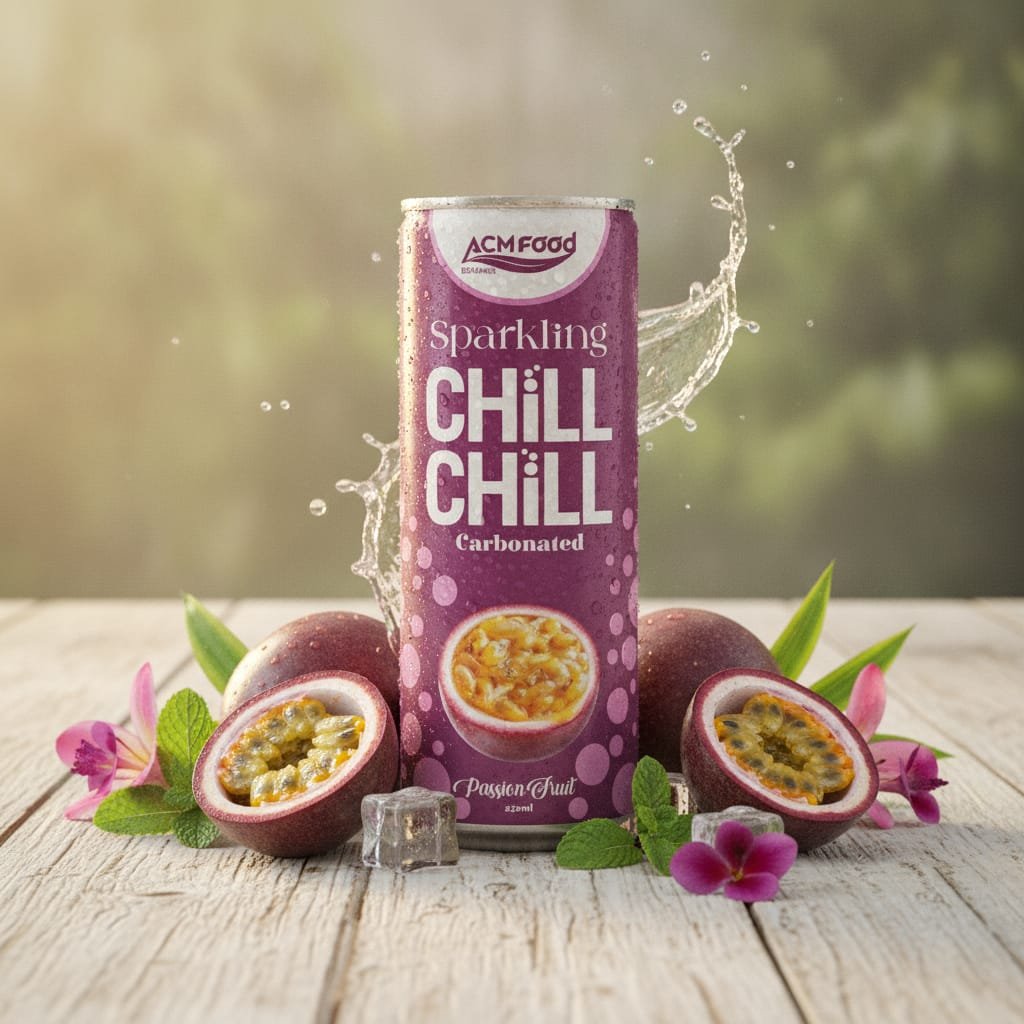
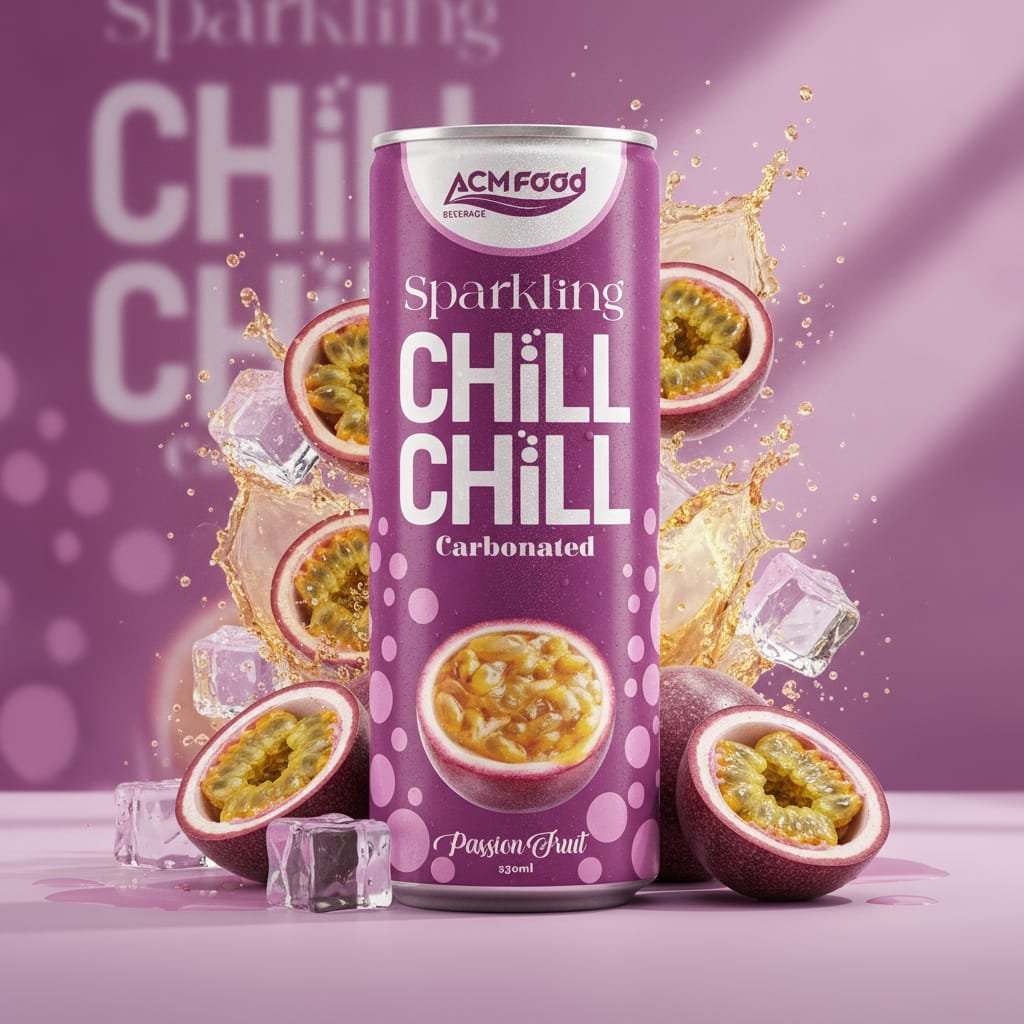
One standout product is the passion fruit sparkling juice sourced from BIDU Beverage. This 250ml can offers a convenient, shelf-stable format ideal for on-the-go consumption. The product’s “Chill Chill” branding emphasizes a cooling, satisfying experience that resonates with younger demographics. Importers can leverage this positioning to target health-conscious millennials and Gen Z consumers who prioritize both flavor and natural ingredients. Furthermore, OEM partners provide customization options for sweetness levels, carbonation intensity, and packaging design, allowing brands to differentiate their private labels.
OEM Manufacturing Capabilities
The OEM ecosystem in Vietnam extends beyond simple production. Manufacturers offer end-to-end services from concept development to export documentation. ACM FOOD’s factory in Cu Chi District, Ho Chi Minh City, operates under strict quality control protocols, ensuring batch consistency. For the passion fruit sparkling juice, the manufacturing process starts with selecting ripe fruits from local farms, followed by cold-pressing and carbonation to preserve freshness. This vertical integration reduces lead times and minimizes supply chain risks. Importers benefit from low minimum order quantities (MOQs) that allow for test market launches without excessive inventory commitment. Such agility is critical in a fast-moving category where consumer preferences evolve rapidly.
Export Logistics and Supply Chain Advantages
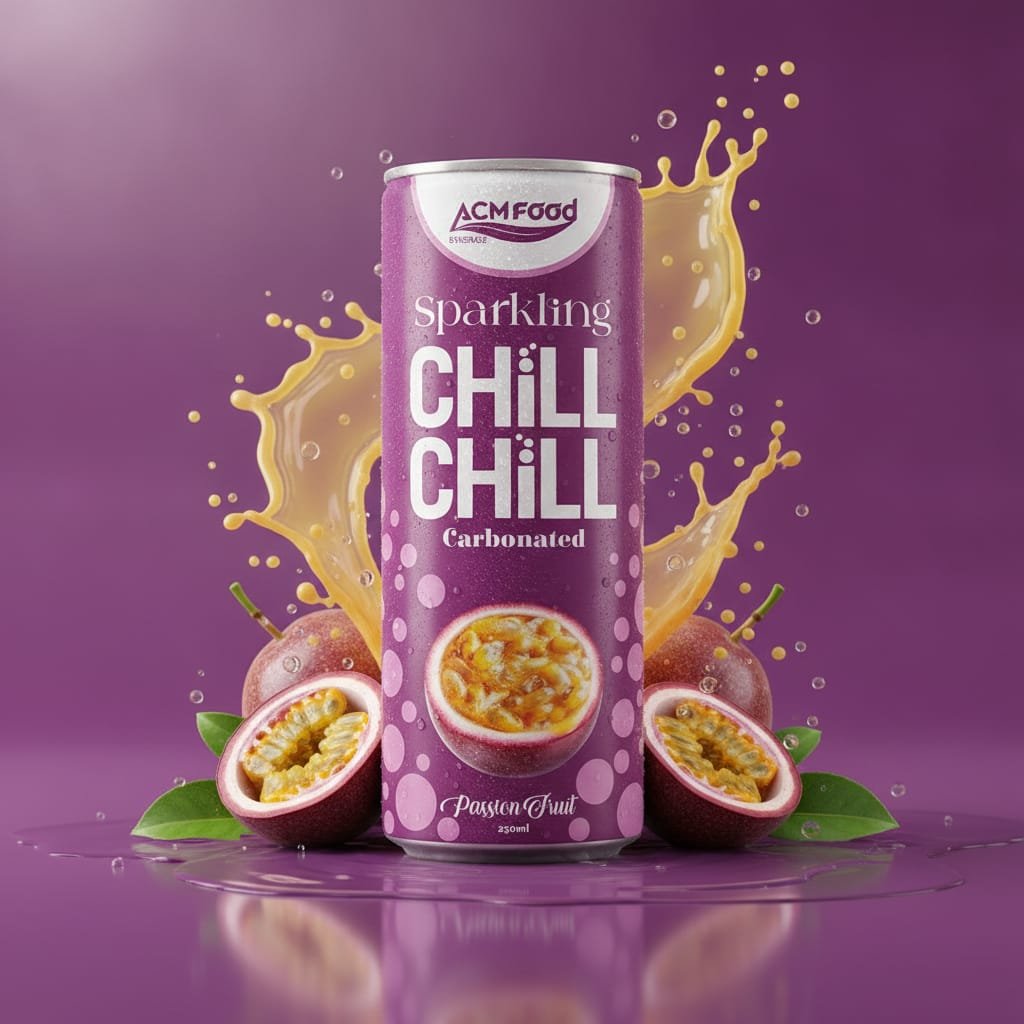
Efficient logistics are the backbone of any tropical sparkling juice export strategy. Vietnam’s proximity to major shipping lanes and its network of deep-sea ports enables cost-effective container shipping to the US West Coast within 20 days, and to Rotterdam within 25 days. ACM FOOD leverages these routes to maintain competitive freight rates. The 250ml aluminum can format further enhances logistics benefits: it is lightweight, stackable, and resistant to damage, reducing shipping costs and ensuring product integrity. Additionally, cans offer a longer shelf life compared to plastic or glass, which is crucial for long-distance exports to markets like the Middle East and Africa.
Compliance with international regulations is another layer where Vietnamese OEMs excel. The fresh fruit juice category demands adherence to specific labeling and additive rules; similarly, the sparkling water drink category requires carbonation stability and microbial safety. ACM FOOD holds certifications that satisfy FDA, EU, and Gulf standards, providing importers with peace of mind. Customized documentation, including halal certificates and organic compliance reports, is prepared for each shipment. This attention to regulatory detail reduces the risk of customs delays and product rejections at destination ports.
For illustrative purposes only
Strategic Considerations for Global Distributors
For distributors contemplating adding a tropical sparkling juice to their portfolio, evaluating OEM partners on multiple criteria is essential. Quality certifications are non-negotiable, but equally important are R&D capabilities, MOQ flexibility, and track record in export logistics. The passion fruit sparkling juice from BIDU demonstrates how a well-executed product can capture consumer interest while offering private label opportunities. Distributors should request samples to assess taste profiles and conduct consumer testing in their target markets. A partner that provides formulation adjustments—such as reduced sugar or added vitamins—can help tailor the product to local preferences.
Importers seeking to differentiate their offerings should also consider co-packing and bundle strategies. Combining passion fruit sparkling juice with related products like tropical concentrates or still juices can create value sets for retail promotion. The ability to supply mixed pallets from a single manufacturer simplifies procurement and reduces administrative overhead. As the global beverage landscape becomes increasingly competitive, those who act early on these tropical sparkling juice export trends will be positioned to lead their market segments.
Frequently Asked Questions
What is driving the global demand for tropical sparkling juices like passion fruit?
Consumers are shifting away from sugary sodas toward natural, functional alternatives. Tropical sparkling juices offer authentic fruit flavors, perceived health benefits, and a refreshing mouthfeel. Passion fruit specifically appeals due to its unique taste and high vitamin C content.
How does Vietnam’s OEM beverage manufacturing compare to other Asian sourcing destinations?
Vietnam offers a favorable balance of cost, quality, and scalability. Labor costs are lower than China, while quality control and certification standards are comparable. Proximity to tropical fruit sources reduces raw material logistics, and trade agreements provide tariff advantages.
What certifications are typically required for exporting passion fruit sparkling juice to the US or EU?
For the US FDA registration, FSMA compliance, and sometimes organic or non-GMO verification. For the EU, HACCP, ISO 22000, and organic certification (EU Organic) are common. Halal and Kosher certifications are also valued in specific markets.
Can private label buyers customize the sugar content or use natural sweeteners in sparkling juice OEM production?
Yes, most OEM providers offer recipe customization. Buyers can request reduced sugar, use of stevia or monk fruit, adjust carbonation levels, and even incorporate added vitamins or electrolytes. This flexibility is a key advantage of partnering with Vietnamese manufacturers.
What are the typical MOQ and lead times for 250ml can exports from Vietnam?
Minimum order quantities often range from 1,000 to 5,000 cartons depending on the supplier. Lead times for production and shipping usually take 4 to 6 weeks after order confirmation, including container loading and documentation.
How does the 250ml can format benefit international distributors compared to other packaging formats?
The 250ml aluminum can is ideal for single-serve, on-the-go consumption. It is lightweight, unbreakable, and provides excellent product protection against light and oxygen. The small format also reduces shipping weight and allows for compact shelf placement.
What logistical challenges should importers anticipate when sourcing sparkling juices from Vietnam?
Challenges include managing container lead times, ensuring proper temperature control during transit, and navigating customs documentation for food products. Working with an experienced OEM partner that provides end-to-end logistics support mitigates these risks.