



Introduction: Tropical superfruit innovation is reshaping the global functional beverage market, with watermelon emerging as a powerhouse ingredient. As consumers demand beverages that deliver both hydration and targeted health benefits from natural sources, manufacturers are pivoting toward fruit-based formulations that combine exotic appeal with proven wellness properties. The market for superfruit-infused drinks is projected to exceed $8 billion by 2028, driven by clean-label preferences and increasing awareness of ingredients like lycopene and citrulline. For OEM producers and private label brands, watermelon offers a versatile foundation for product differentiation. This article analyzes the rise of tropical superfruit beverages, using the BIDU Watermelon Fruit Juice 320ml Can as a case study to explore market impact, business strategy, and future trends.
Contents
- 1 The Rise of Tropical Superfruits in the Global Functional Beverage Market
- 2 Case Study: BIDU Watermelon Fruit Juice 320ml Can as a Market Leader
- 3 Market Impact: Consumer Demand Driving Tropical Superfruit Adoption
- 4 Business Strategy: OEM and Private Label Opportunities in Superfruit Beverages
- 5 Expert Perspectives on the Future of Superfruit Beverages
- 6 Future Outlook: Superfruit Trends for 2026-2030
- 7 Frequently Asked Questions About Tropical Superfruit Innovation and B2B Strategy
- 7.1 What makes watermelon a functional superfruit for beverages?
- 7.2 How can OEM partners benefit from the superfruit trend?
- 7.3 What are the key regulatory challenges for exporting watermelon juice?
- 7.4 How does packaging format affect consumer acceptance?
- 7.5 What future innovations are expected in superfruit beverages?
The Rise of Tropical Superfruits in the Global Functional Beverage Market
Tropical superfruit innovation is reshaping the functional beverage landscape at an unprecedented pace. Global consumers increasingly seek drinks that offer both hydration and targeted health benefits from natural sources. This shift has propelled watermelon from a simple summer refreshment into a strategic ingredient for functional beverage brands worldwide. The market for superfruit-infused drinks is projected to exceed $8 billion by 2028, driven by demand for clean-label, nutrient-dense options. Manufacturers are racing to capitalize on this trend by developing products that combine exotic flavors with proven wellness properties.
Watermelon, in particular, stands out for its rich content of lycopene, citrulline, and electrolytes. These compounds support cardiovascular health, muscle recovery, and hydration efficiency. Unlike synthetic functional additives, watermelon offers a naturally appealing taste profile that resonates with health-conscious demographics. For OEM producers and private label brands, this ingredient provides a versatile foundation for product differentiation. The challenge lies in preserving its nutritional integrity through processing while maintaining shelf stability and flavor consistency.
Why Watermelon is the Superfruit of Choice for 2025
Watermelon’s functional profile includes high levels of vitamin C, vitamin A, and potassium, making it ideal for sports nutrition and daily wellness. Clinical studies have linked watermelon consumption to reduced muscle soreness and improved exercise performance. Its natural sweetness allows for reduced added sugar content, aligning with global sugar reduction mandates. For B2B buyers evaluating new product lines, watermelon-based beverages offer a compelling combination of consumer appeal and regulatory compliance. The ingredient’s versatility also extends to sparkling waters, juice blends, and concentrated formats.
Case Study: BIDU Watermelon Fruit Juice 320ml Can as a Market Leader
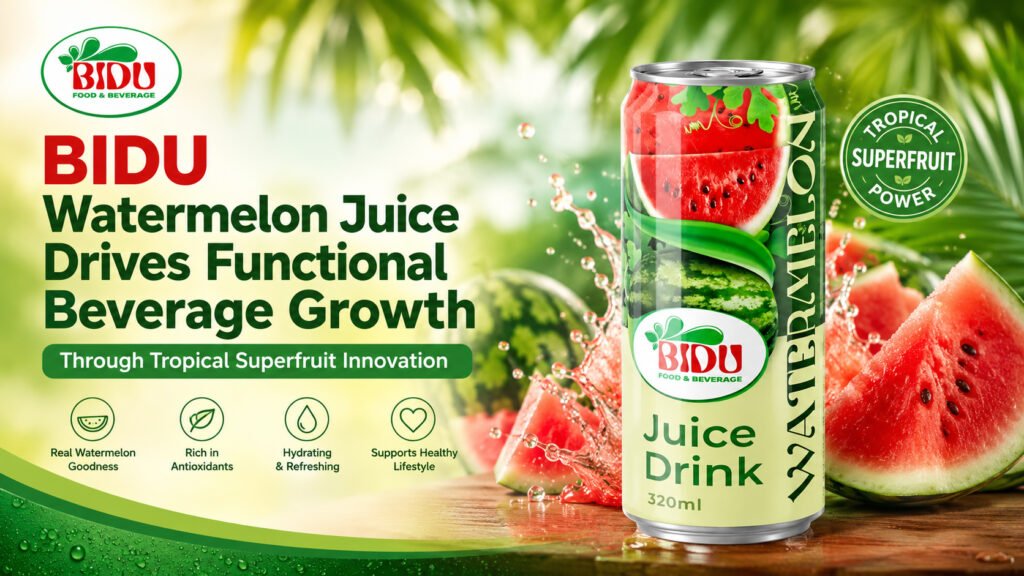
The BIDU Watermelon Fruit Juice 320ml Can exemplifies how tropical superfruit innovation can be executed at scale. This ready-to-drink product leverages premium watermelon juice as its core ingredient, delivering authentic flavor without artificial additives. Its 320ml can format targets on-the-go consumers in retail, food service, and vending channels. The product’s clean label appeal is reinforced by minimal processing and no preservatives, meeting the demands of discerning importers and distributors. For OEM partners, this serves as a benchmark for developing custom formulations that capture market share in the functional beverage segment.
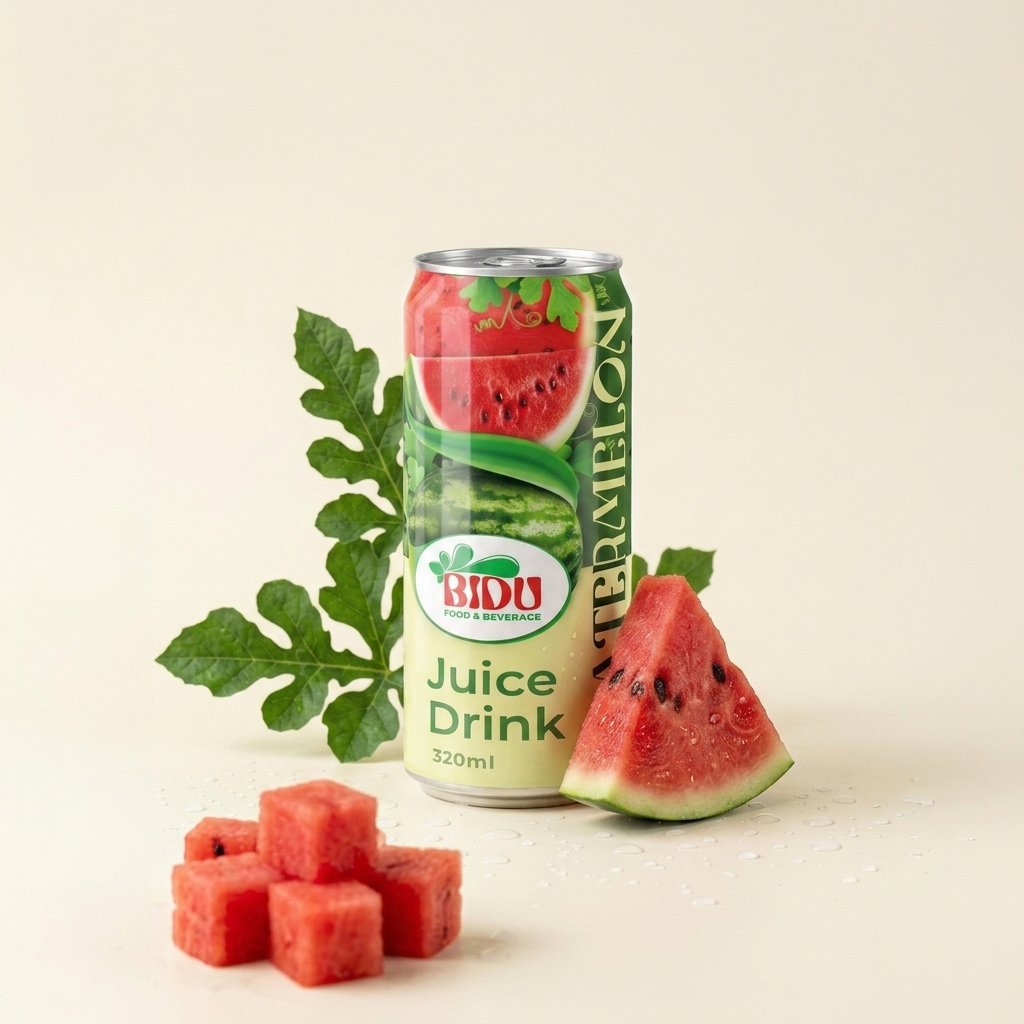
From a manufacturing perspective, the BIDU watermelon juice line demonstrates advanced aseptic processing technology. This technique preserves the fruit’s natural nutrients and flavor while ensuring a shelf life suitable for global export. The product’s success in Asian and Middle Eastern markets highlights the cross-cultural appeal of watermelon-based functional drinks. Distributors looking to expand their portfolio can use this case study to evaluate potential manufacturing partners. The watermelon juice 320ml can also serves as a platform for private label adaptation, allowing brands to enter the superfruit category with reduced development risk.
Product Specifications and B2B Advantages
Each 320ml can delivers a consistent 12% juice content, balanced with natural sweeteners to achieve an optimal sugar-to-acid ratio. The packaging features a resealable lid option for extended consumption occasions. For B2B clients, BIDU offers flexible MOQ arrangements starting from 5000 units per SKU. This low barrier to entry enables small and medium-sized brands to test the superfruit market without excessive inventory risk. The production facility holds ISO 22000 and HACCP certifications, ensuring compliance with international food safety standards. Export documentation includes full traceability from farm to finished product.
Market Impact: Consumer Demand Driving Tropical Superfruit Adoption
Consumer behavior data reveals a 35% year-over-year increase in purchases of watermelon-based beverages across North America and Europe. Millennials and Gen Z consumers prioritize functional benefits and natural ingredients, making watermelon a preferred choice over synthetic sports drinks. Social media trends around hydration and clean eating further amplify this demand. Retailers are expanding shelf space for superfruit categories, with watermelon juice emerging as a top performer in the fruit juice segment. This shift presents a strategic opportunity for beverage manufacturers to align their product development with consumer preferences.
Regional variations in taste preference influence product formulation. In Southeast Asia, consumers favor sweeter profiles with added coconut water or aloe vera. Middle Eastern markets show strong demand for sparkling watermelon variants. European importers prioritize organic certification and low-sugar claims. Understanding these nuances is critical for OEM exporters aiming to penetrate diverse markets. The fresh fruit juice category at ACM Beverage illustrates how product lines can be tailored to regional demands while maintaining core quality standards.
Regulatory and Labeling Considerations
Functional beverage claims must comply with local regulations in target export markets. The US FDA requires substantiation for any health-related messaging, while EU regulations restrict certain nutritional claims. BIDU’s watermelon juice is formulated to meet clean label standards without sacrificing taste. For private label partners, the company provides regulatory support to ensure labeling compliance across jurisdictions. This reduces time-to-market for brands entering new regions.
Business Strategy: OEM and Private Label Opportunities in Superfruit Beverages
For beverage brands seeking to enter the superfruit segment, partnering with an experienced OEM manufacturer offers significant advantages. The capital investment required for in-house processing and packaging can be prohibitive for many companies. Outsourcing production to a facility like BIDU allows brands to focus on marketing and distribution while leveraging established supply chains.
The company’s expertise in watermelon juice processing ensures consistent quality across batches, a critical factor for maintaining brand reputation. Private label clients can customize sweetness levels, carbonation, and packaging formats to suit their target audience.
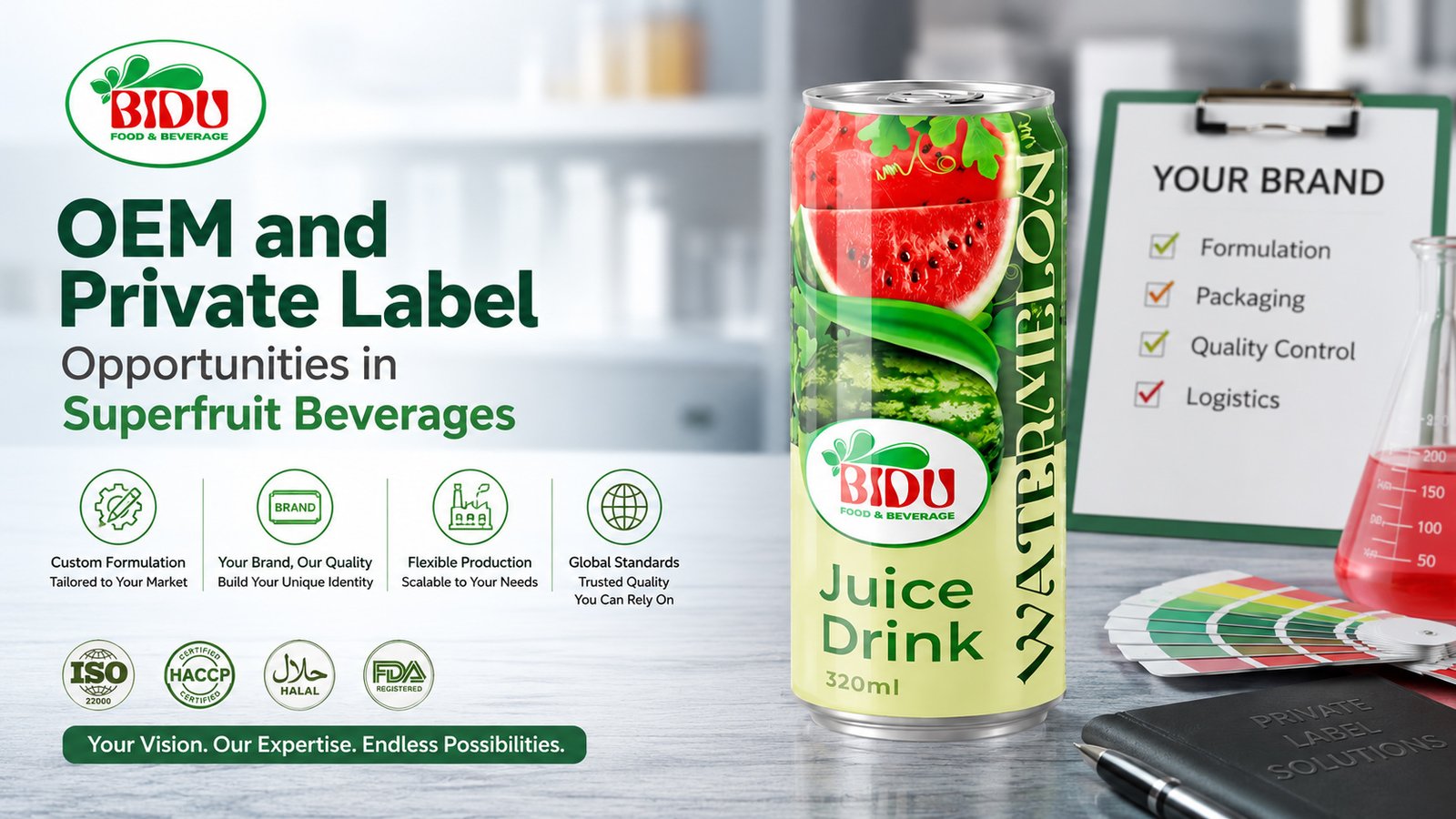
Strategic partnerships also enable faster product iteration. Market trends in functional beverages evolve rapidly, and the ability to launch new SKUs within 60 days is a competitive differentiator. BIDU’s R&D team works closely with clients to develop proprietary formulations that cannot be easily replicated by competitors. This approach has proven successful for brands that have captured niche segments such as organic watermelon juice or watermelon-electrolyte blends. For importers evaluating potential suppliers, production capacity and MOQ flexibility are key decision criteria.
The sparkling water drink category at ACM Beverage demonstrates how carbonation can be added to fruit juice bases to create premium products. This diversification strategy allows brands to offer multiple price points and consumption occasions within a single product family. B2B buyers should consider suppliers that offer both still and sparkling capabilities to maximize product line potential.
Expert Perspectives on the Future of Superfruit Beverages
Industry analysts at Euromonitor International predict that superfruit beverages will capture 15% of the global functional drink market by 2027. Dr. Sarah Chen, a food science researcher at the University of California, notes that watermelon’s unique combination of hydration and recovery benefits positions it as a staple ingredient. From a supply chain standpoint, advancements in cold-press technology and aseptic packaging have made it feasible to produce premium watermelon juice at scale. Experts emphasize that brands must prioritize authenticity and transparency to build consumer trust in this competitive space.
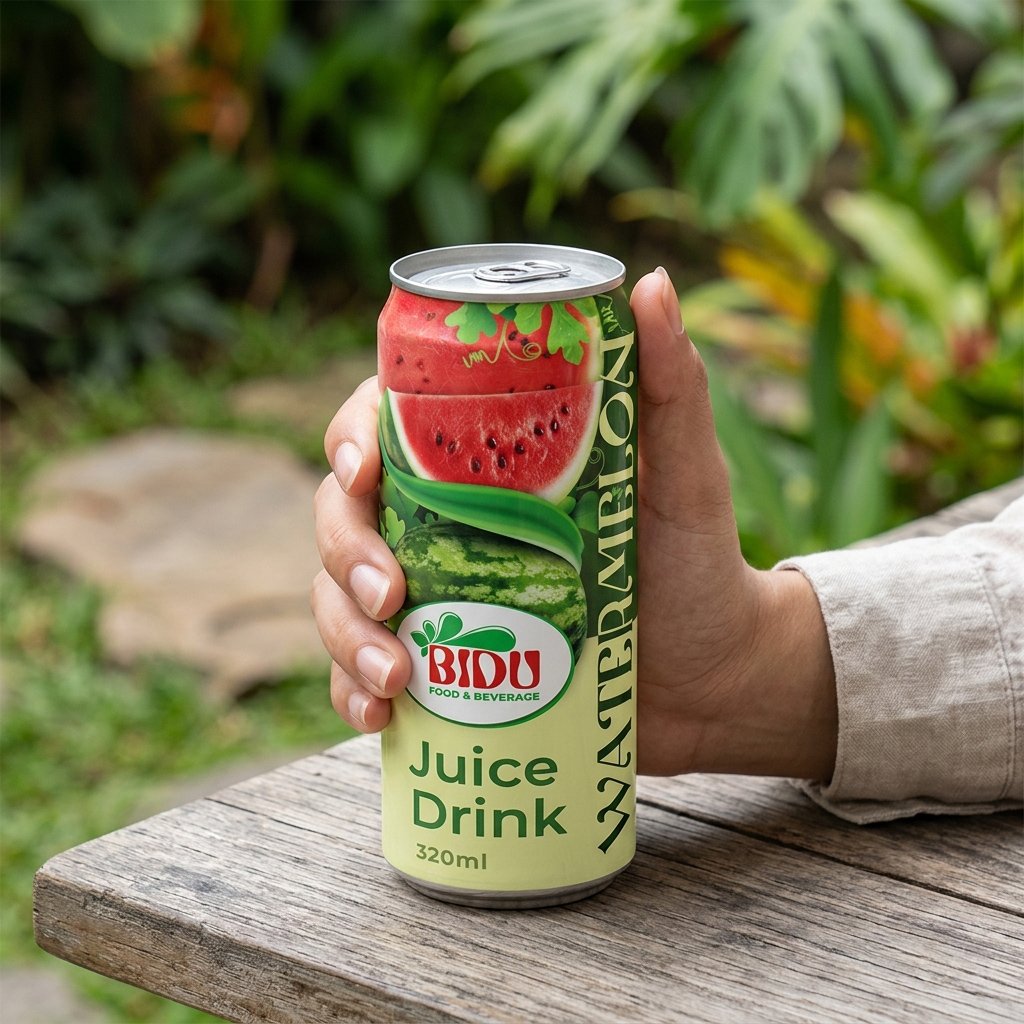
Investment in sustainable packaging is also becoming a differentiator. BIDU’s 320ml can is fully recyclable, and the company is exploring biodegradable options for future product lines. This aligns with growing consumer expectations for environmental responsibility.
For OEM partners, adopting sustainable practices can open doors to eco-conscious retailers and distributors. The convergence of health, flavor, and sustainability defines the next wave of functional beverage innovation.
Future Outlook: Superfruit Trends for 2026-2030
Looking ahead, the superfruit beverage market will likely see increased segmentation into functional niches. Watermelon-based drinks targeting specific health outcomes—such as post-workout recovery, sleep support, or immune boosting—will emerge as distinct subcategories. Personalized nutrition, enabled by AI and DNA-based recommendations, may influence product formulation. Manufacturers that invest in flexible production lines capable of small-batch customization will be well-positioned to serve this evolving demand. Global trade agreements and improvements in cold chain logistics will further facilitate the export of fresh-tasting fruit juices to distant markets.
The role of watermelon as a superfruit is set to expand beyond beverages into adjacent categories like functional gummies, powders, and frozen treats. Cross-category innovation will create new revenue streams for brands that establish strong consumer recognition. For B2B stakeholders, the key to long-term success lies in building agile supply chains and fostering collaborative relationships with ingredient suppliers. The next decade promises to be a period of rapid growth and transformation for the tropical superfruit sector.
Frequently Asked Questions About Tropical Superfruit Innovation and B2B Strategy
What makes watermelon a functional superfruit for beverages?
Watermelon is rich in lycopene, citrulline, and electrolytes, which support heart health and muscle recovery. Its natural sweetness allows for reduced added sugar, aligning with clean label trends. These properties make it a versatile ingredient for sports nutrition and daily hydration products.
How can OEM partners benefit from the superfruit trend?
OEM partners gain access to established processing technology and supply chains without capital investment. They can customize formulations quickly to capture emerging market segments. Low MOQ options reduce financial risk for small and medium-sized brands entering the category.
What are the key regulatory challenges for exporting watermelon juice?
Exporters must comply with labeling and health claim regulations in target markets like the US and EU. Documentation of nutritional content and ingredient sourcing is required. Partnering with a manufacturer that provides regulatory support simplifies market entry.
How does packaging format affect consumer acceptance?
Convenient formats like the 320ml can appeal to on-the-go consumers in retail and vending channels. Resealable options extend consumption occasions. Eco-friendly packaging enhances brand image and meets retailer sustainability requirements.
What future innovations are expected in superfruit beverages?
Expect personalized formulations targeting specific health benefits, such as sleep or immunity. AI-driven product development will enable rapid iteration. Cross-category expansion into functional snacks and powders will create new growth opportunities.