


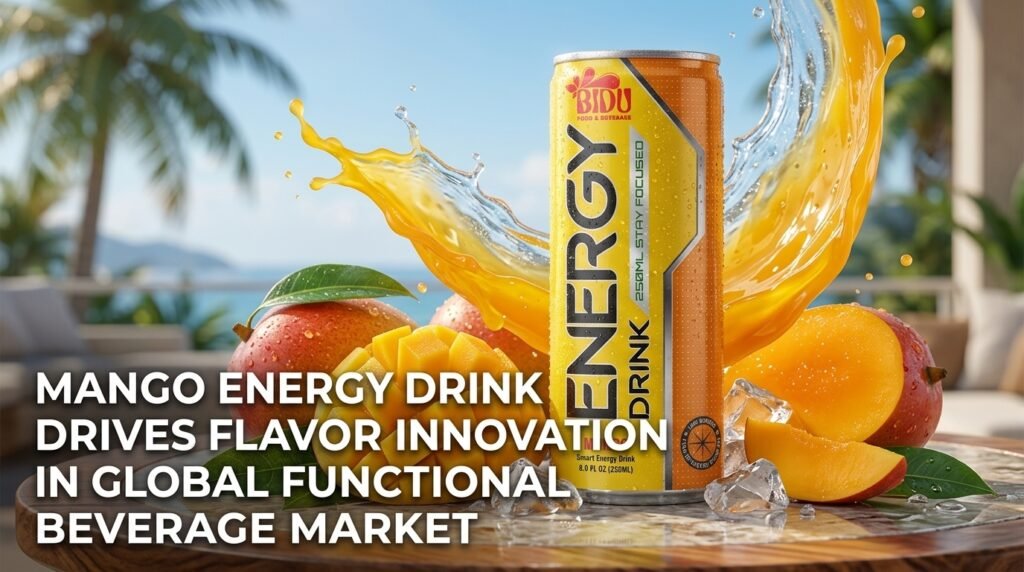
The global energy drink sector is undergoing a significant transformation as consumers increasingly demand novel taste experiences beyond traditional citrus and berry profiles. Tropical flavors, particularly mango, have emerged as a powerful catalyst for market expansion, attracting both younger demographics and health-conscious adults seeking functional benefits wrapped in exotic appeal.
For distributors and importers, understanding this shift is critical to capturing emerging opportunities. The rise of mango-flavored energy drinks, such as the Mango Energy Drink Wholesale – 250ml Cans for Distributors, represents a strategic product innovation that combines familiar energy-boosting ingredients with a universally loved tropical taste, creating a versatile SKU for retail and on-the-go channels.
Contents
- 1 Market Dynamics: Tropical Flavors Fuel Energy Drink Growth
- 2 Product Deep Dive: Mango Energy Drink in 250ml Cans
- 3 B2B Strategic Insights: OEM/ODM as a Competitive Advantage
- 4 Future Outlook: Mango and Beyond in Functional Beverages
- 5 Frequently Asked Questions (FAQ)
- 5.1 What is the current trend driving the mango energy drink market?
- 5.2 How can distributors benefit from OEM production of mango energy drinks?
- 5.3 What certifications should a buyer look for in an energy drink OEM?
- 5.4 Are 250ml cans a good format for energy drink export?
- 5.5 What is the minimum order quantity typically required for mango energy drink OEM?
Market Dynamics: Tropical Flavors Fuel Energy Drink Growth
The functional beverage market is projected to exceed $200 billion by 2028, with energy drinks holding a dominant share. Flavor innovation has become a key differentiator, as shelf space is increasingly contested. Mango, with its vibrant color and sweet-tart profile, offers a bridge between mainstream appeal and exotic novelty, making it an ideal choice for brands targeting both mature and emerging markets.
Consumer surveys indicate that over 60% of energy drink buyers are willing to try new flavors, and tropical variants have seen a 25% year-over-year increase in sales across Asia-Pacific and the Middle East. This trend is particularly pronounced in hot climates where refreshing, flavorful beverages are favored. The mango energy drink category is benefiting from this tailwind, providing distributors with a product that stands out on shelves.
Product Deep Dive: Mango Energy Drink in 250ml Cans
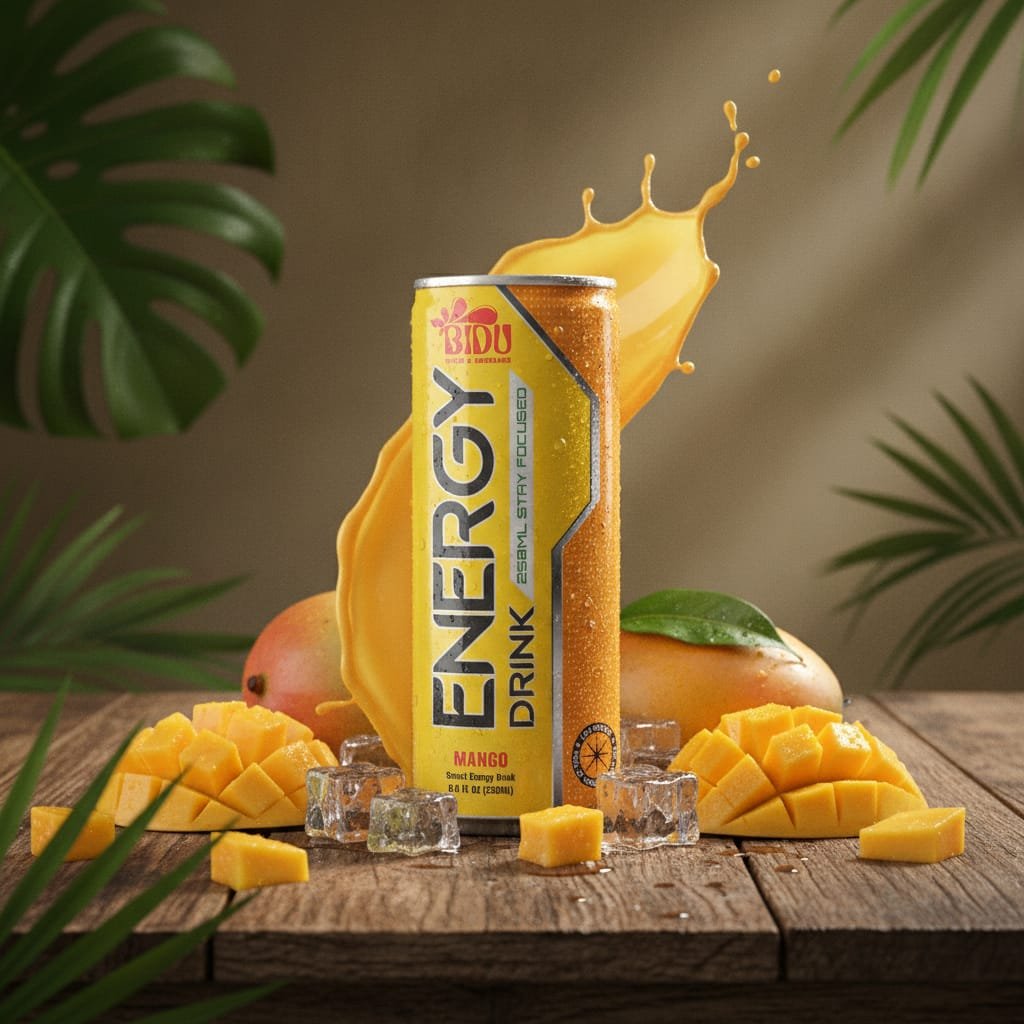
The 250ml can format is a strategic choice for the energy drink segment, offering portability, portion control, and a lower price point suitable for impulse purchases. The formulation typically includes caffeine (80-120mg), taurine, B-complex vitamins, and natural or nature-identical mango flavoring. This combination delivers the expected energy lift while satisfying the demand for natural-tasting, less synthetic flavors.
From a manufacturing perspective, sourcing high-quality mango flavor is essential. The OEM/ODM capabilities of partners like ACM FOOD enable precise flavor customization, allowing brands to adjust sweetness, acidity, and aftertaste to suit regional palates. The 250ml aluminum can also supports sustainability goals, as it is infinitely recyclable and lightweight for efficient export logistics.
Customization Opportunities for Brands
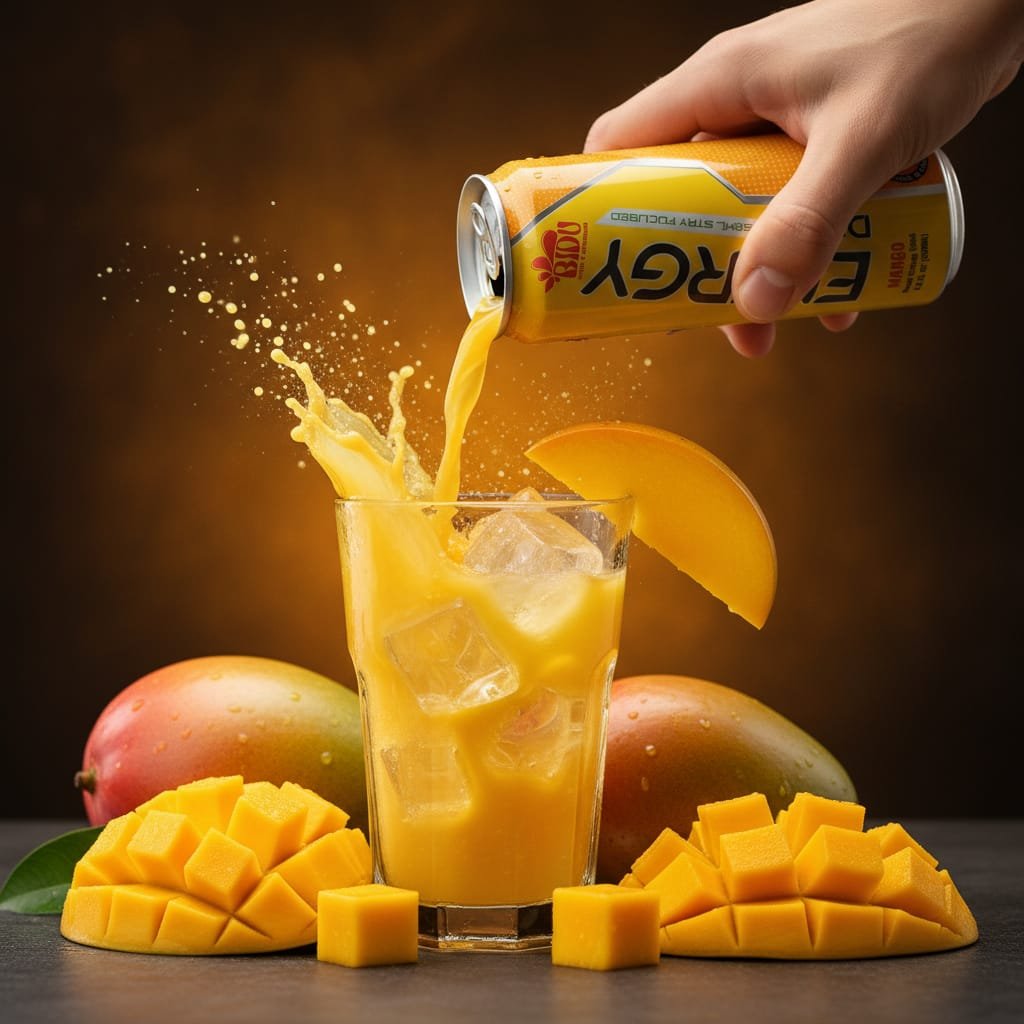
Private label and contract manufacturing have become gateways for beverage brands to enter the energy drink space without heavy capital investment. Flexible MOQ arrangements, often starting from a few thousand units, allow startups and regional distributors to test markets. The energy drink category at BIDU Beverage exemplifies how OEM manufacturers are expanding their offerings to include tropical flavors like mango, providing turnkey solutions from formula development to packaging design.
For established brands, product differentiation through packaging—such as sleek cans, matte finishes, or limited-edition graphics—can further drive consumer interest. The mango energy drink segment lends itself well to vibrant visual branding that evokes sunshine and vitality.
B2B Strategic Insights: OEM/ODM as a Competitive Advantage
One of the most effective ways to capitalize on the mango energy drink trend is through an OEM/ODM partnership. Vietnam-based manufacturers like ACM FOOD have positioned themselves as key players in the global beverage supply chain, offering over 10 automated production lines and a monthly export capacity exceeding 300 containers. Their certifications—FSSC 22000, ISO, BSCI, Halal, and Kosher—ensure access to regulated markets including the US, EU, and Middle East.
For distributors, partnering with an experienced OEM reduces time-to-market for new flavor launches. Instead of building a factory, they can leverage existing R&D capabilities to create a proprietary mango energy drink recipe that meets local regulatory requirements. This is particularly valuable for brands aiming to enter markets with strict labeling and ingredient rules, as the OEM handles compliance documentation and shelf-life testing.
Export logistics are also streamlined. The port of Ho Chi Minh City provides efficient shipping routes to North America, Europe, and Asia. Container loads of 250ml cans are stackable and cost-effective to transport, with typical lead times of 4-6 weeks from order to delivery. This agility supports just-in-time inventory strategies for distributors.
Case Study: Scaling a Mango Energy Drink Brand
Consider a hypothetical distributor in the Middle East looking to introduce a new energy drink. By partnering with an OEM, they can source a mango-flavored formula with natural colors, adjust caffeine content to local norms, and arrange for printing Arabic labels. The 250ml can size is ideal for single-serve retail, and the mango flavor avoids the bitterness often associated with traditional energy drinks, attracting female consumers who are underrepresented in the category.
This approach has been validated by multiple market entrants. The flexibility of OEM production allows for small-batch test runs before full-scale rollout, reducing financial risk. Once a product gains traction, scaling up is straightforward due to the spare capacity at contract manufacturing facilities.
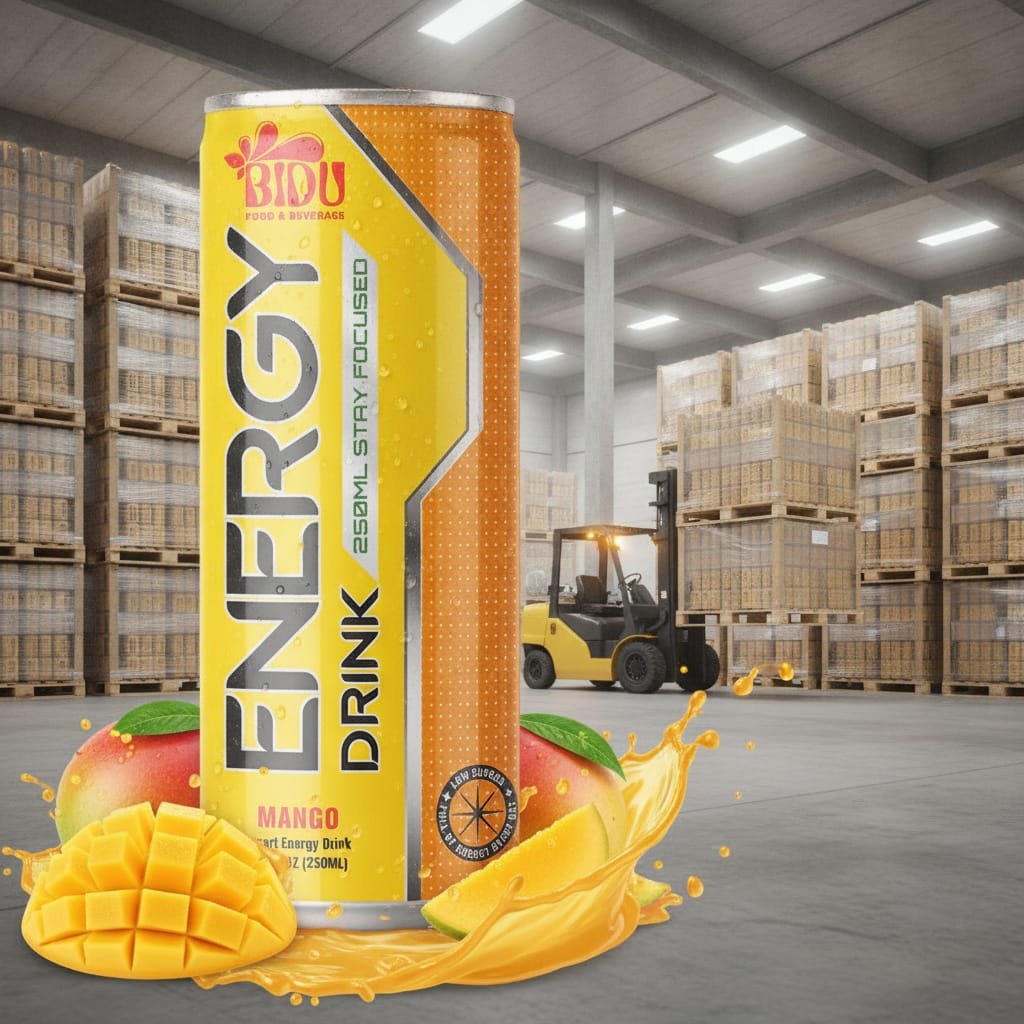
For illustrative purposes only
Future Outlook: Mango and Beyond in Functional Beverages
As the energy drink market matures, flavor diversification will remain a primary growth driver. Mango is just the beginning; combinations like mango-passionfruit, mango-ginger, and mango-coconut are emerging in premium segments. The clean label movement also influences formulation, with consumers seeking recognizable ingredients and reduced sugar options. Manufacturers are responding with stevia-sweetened versions and added functional benefits such as electrolytes, vitamins, or adaptogens.
For B2B players, the message is clear: investing in tropical flavor innovation today positions brands to capture the next wave of energy drink consumers. The Mango Energy Drink Wholesale – 250ml Cans is not just a product; it is a strategic tool for market differentiation.
Frequently Asked Questions (FAQ)
What is the current trend driving the mango energy drink market?
The trend is the global shift toward exotic, tropical flavors in functional beverages. Consumers are moving away from standard cola and citrus profiles, creating demand for new taste experiences that also deliver energy and wellness benefits. Mango, with its universal appeal and perceived naturalness, is a leading flavor in this shift.
How can distributors benefit from OEM production of mango energy drinks?
OEM production reduces upfront investment in manufacturing facilities and allows distributors to focus on brand building and distribution. They can leverage existing formulas, adjust to local regulations, and use small MOQs to test markets. This model also speeds up time-to-market and offers scalability based on demand.
What certifications should a buyer look for in an energy drink OEM?
Key certifications include FSSC 22000 or ISO 22000 for food safety, ISO 9001 for quality management, and market-specific certifications like Halal, Kosher, or USDA Organic. For export to the EU, also look for compliance with EU food additive regulations and BSCI for social compliance.
Are 250ml cans a good format for energy drink export?
Yes, 250ml cans are lightweight, tamper-proof, and recyclable. They maximize container space during shipping and are ideal for single-serve retail in convenience stores, gyms, and vending machines. The format also appeals to health-conscious consumers who prefer smaller portions.
What is the minimum order quantity typically required for mango energy drink OEM?
MOQs vary by manufacturer but often start around 10,000-20,000 units per SKU. Some OEMs offer flexible terms for trial runs, with standard containers of 20-24 pallets for full-scale orders. Always confirm MOQ, lead time, and sample costs with the supplier before committing.