






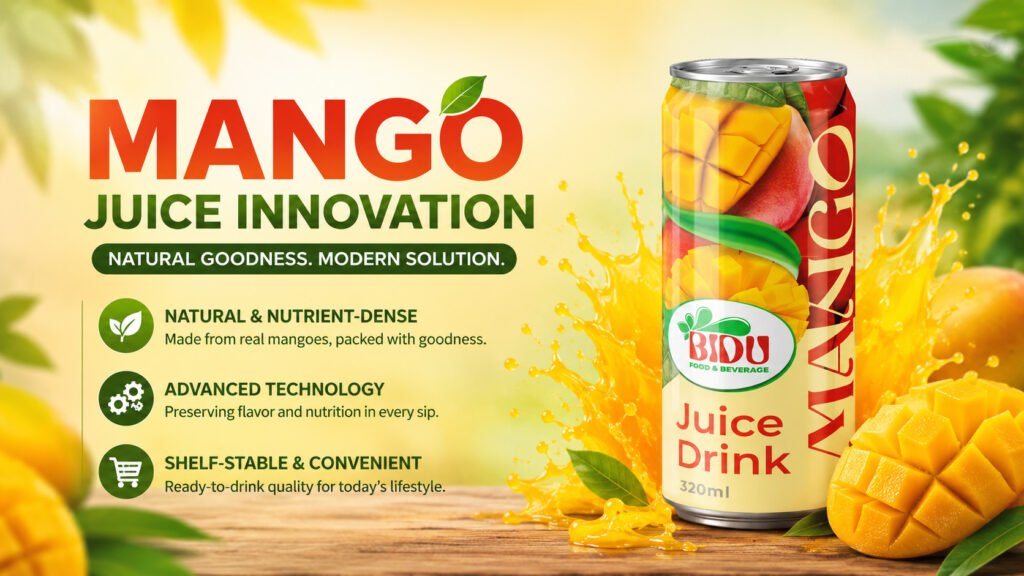
Tropical fruit juice innovation is transforming the global beverage industry, with mango-based products leading the charge in the functional drinks segment. This shift is fueled by consumer demand for natural, nutrient-dense options that deliver both taste and health benefits. As the market for clean-label, ready-to-drink juices expands, manufacturers are investing in advanced processing technologies to preserve flavor and nutritional integrity. The Bidu Mango Fruit Juice 320ml Can exemplifies this trend, offering a shelf-stable solution that meets modern consumer expectations.
For OEM partners and distributors, understanding this innovation wave is critical to capturing growth in a competitive landscape.
Contents
- 1 Market Transformation Through Tropical Fruit Juice Innovation
- 2 Health and Wellness Drivers in the Mango Juice Segment
- 3 OEM and Private Label Opportunities in Tropical Juices
- 4 Global Market Expansion and Export Potential
- 5 Expert Insights on the Future of Tropical Fruit Beverages
- 6 Future Outlook and Strategic Recommendations
- 7 Frequently Asked Questions
- 7.1 What makes tropical fruit juice innovation a key market trend?
- 7.2 How can OEM partners benefit from the mango juice segment?
- 7.3 What are the key export opportunities for mango-based beverages?
- 7.4 How does clean label impact tropical fruit juice production?
- 7.5 What future innovations are expected in the tropical juice category?
Market Transformation Through Tropical Fruit Juice Innovation
Tropical fruit juice innovation is reshaping the global functional beverage landscape. The surge in demand for natural, nutrient-dense drinks has positioned mango-based products as key players in the RTD sector. This shift reflects a broader consumer pivot toward clean-label, functional ingredients. Industry data indicates a 15% annual growth in tropical fruit juice categories, driven by health-conscious demographics.
Manufacturers are responding by developing proprietary extraction methods that preserve bioactive compounds. The Bidu Mango Fruit Juice 320ml Can exemplifies this trend, offering a shelf-stable format without compromising nutritional integrity. Such products bridge the gap between indulgence and wellness, a critical factor in modern beverage strategy.
Consumer Demand for Authentic Tropical Flavors
Authenticity in tropical fruit juice innovation is no longer optional. Consumers now scrutinize sourcing and processing methods. They seek products that deliver genuine taste and functional benefits. This demand has accelerated R&D in cold-press and flash-pasteurization technologies. These methods retain volatile flavor compounds often lost in traditional processing.
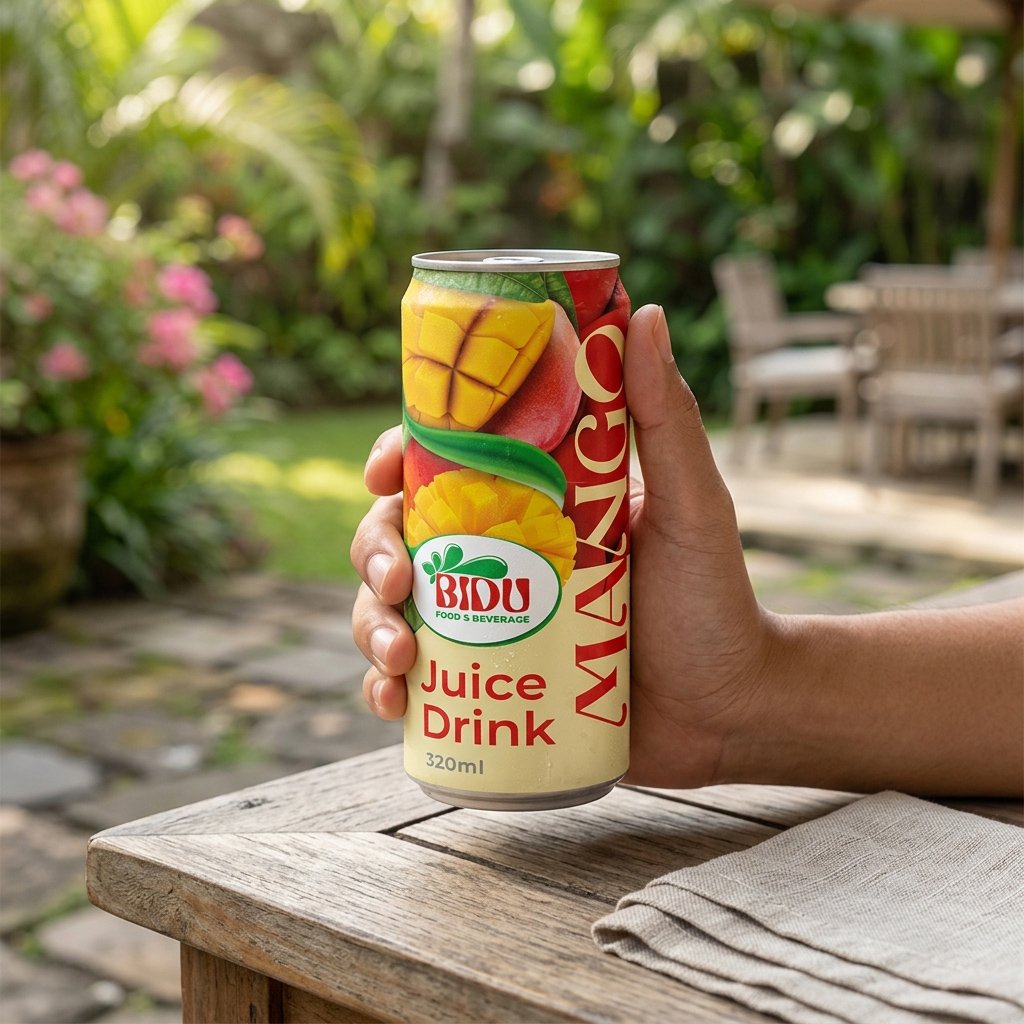
The Bidu mango fruit juice 320ml can leverages such technology to maintain a fresh-pressed profile. This approach aligns with the clean-label movement, where minimal processing signals higher quality. For OEM partners, replicating this authenticity at scale presents both a challenge and a market opportunity.
Health and Wellness Drivers in the Mango Juice Segment
Health attributes are central to tropical fruit juice innovation. Mangoes are rich in vitamins A and C, antioxidants, and digestive enzymes. These properties position mango juice as a functional beverage rather than a simple refreshment. The global functional juice market is projected to exceed $25 billion by 2028, with tropical variants leading growth.
Beverage developers are fortifying mango juice with additional nutrients like zinc and probiotics. This creates hybrid products that appeal to immunity-focused consumers. The Bidu Mango Fruit Juice 320ml Can serves as a case study in functional simplicity, offering natural benefits without artificial additives. Such positioning strengthens brand credibility in a crowded marketplace.
Clean Label and Transparency Trends
Clean label is a non-negotiable standard in tropical fruit juice innovation. Products must list recognizable ingredients and avoid synthetic preservatives. This transparency builds trust, especially among millennial and Gen Z buyers. They are willing to pay a premium for verifiable quality.
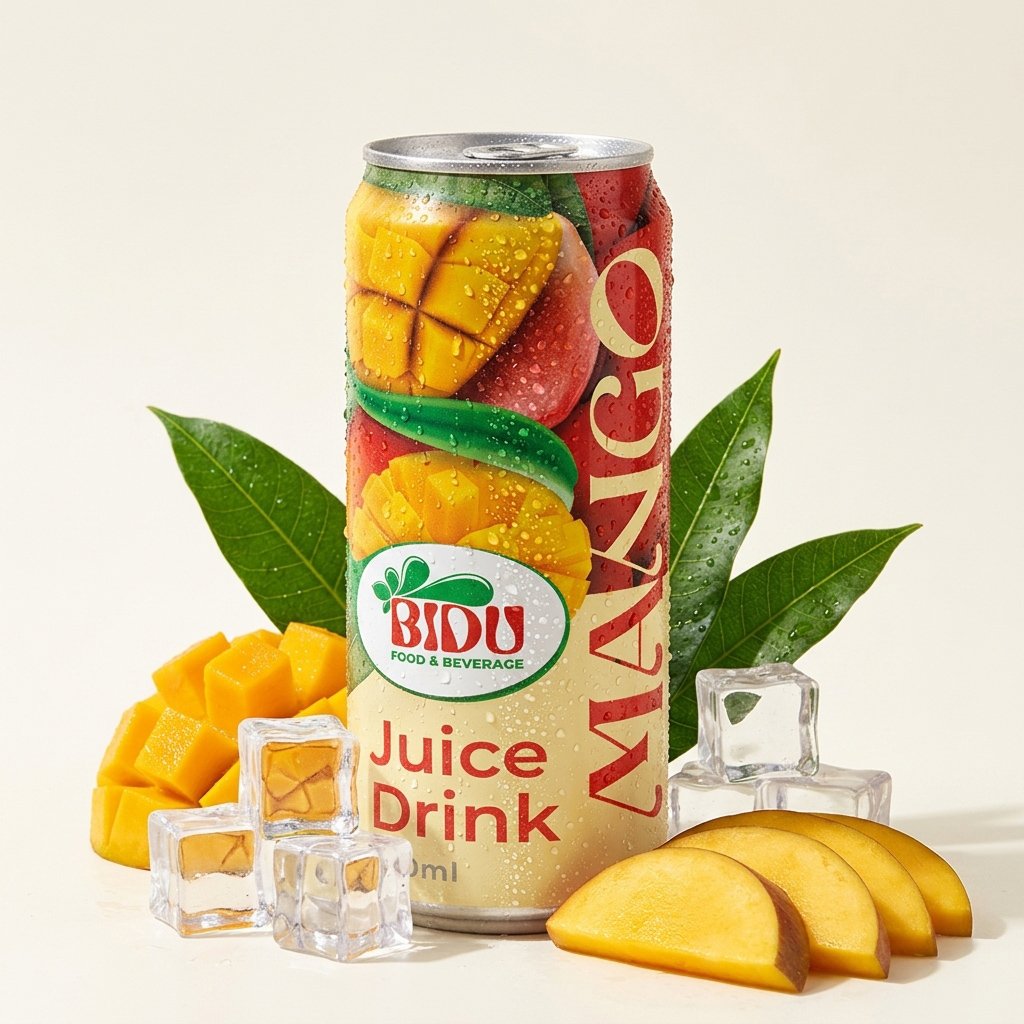
OEM manufacturers must adapt by sourcing traceable fruit concentrates and using eco-friendly packaging. The Bidu Mango Fruit Juice 320ml Can meets these criteria with a simple ingredient deck and recyclable aluminum. This model is replicable for private label clients seeking market entry.
OEM and Private Label Opportunities in Tropical Juices
Tropical fruit juice innovation opens substantial OEM and private label opportunities. Retailers and distributors can differentiate their portfolios with unique mango-based offerings. The flexibility of OEM production allows for custom formulations, packaging sizes, and branding. This agility is crucial in a market where speed-to-market determines competitive advantage.
For example, a distributor targeting the US market might request a lower-sugar variant with added vitamin D. An OEM partner like BIDU can adjust recipes and MOQs accordingly. The Bidu Mango Fruit Juice 320ml Can demonstrates scalable production with consistent quality. Such capabilities reduce barriers for new entrants in the functional beverage space.
Low MOQ and Customization as Strategic Levers
Low minimum order quantities are a strategic advantage in tropical fruit juice innovation. They allow brands to test markets without excessive inventory risk. Customization extends to label design, sweetener profiles, and even carbonation levels. This flexibility is particularly valuable for niche health brands targeting specific demographics.
BIDU’s manufacturing setup enables these customizations while maintaining cost efficiency. Partners can start with a standard base like the Bidu Mango Fruit Juice 320ml Can and iterate based on consumer feedback. This iterative approach accelerates product refinement and market fit.
Global Market Expansion and Export Potential
Tropical fruit juice innovation is driving export growth from manufacturing hubs in Asia. Countries like Vietnam offer cost advantages in raw material sourcing and labor. This makes them attractive partners for global brands seeking competitive pricing. The export market for mango juice alone is growing at 12% CAGR, with strong demand in the Middle East and Europe.
Products like the Bidu Mango Fruit Juice 320ml Can are well-suited for these regions due to their long shelf life and portability. OEM partners can leverage existing logistics networks to reach distant markets efficiently. The key is aligning production capacity with regional regulatory requirements.
For distributors evaluating entry into the fruit juice segment, exploring options within fresh fruit juice ACMFood categories provides a strategic starting point. This category includes various tropical blends that can be tailored to local palates.
Navigating international regulations is a critical component of tropical fruit juice innovation. Each target market has unique labeling, preservative, and nutritional standards. OEM partners must invest in certification processes like FDA, EU organic, and Halal. These credentials open doors to premium market segments.
BIDU’s compliance infrastructure supports partners in achieving these certifications efficiently. The Bidu Mango Fruit Juice 320ml Can is manufactured in facilities meeting international food safety standards. This reduces time-to-market for export-focused brands.
Expert Insights on the Future of Tropical Fruit Beverages
Industry experts predict that tropical fruit juice innovation will converge with personalized nutrition. Advances in data analytics will enable tailored formulations based on consumer health profiles. This could lead to direct-to-consumer models where juice blends are customized at point of sale.
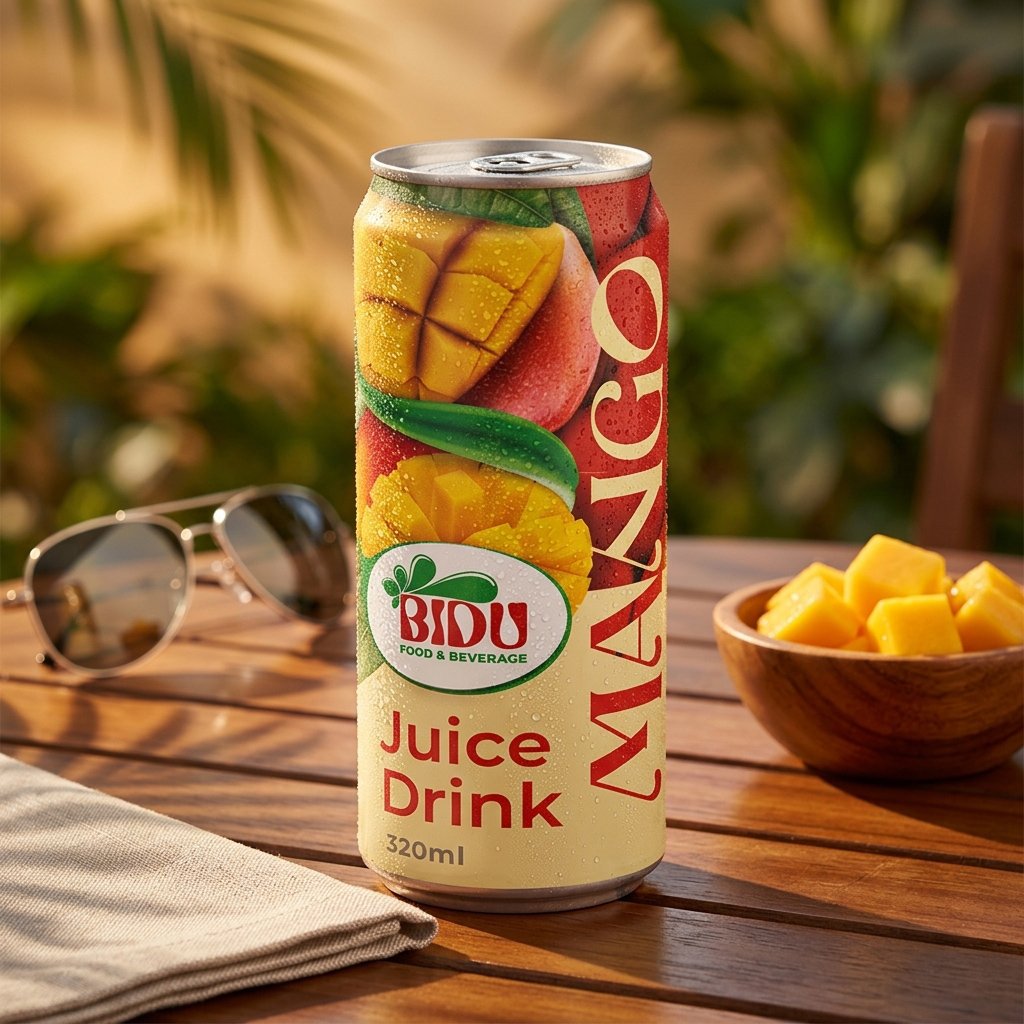
Dr. Lisa Chen, a beverage technology consultant, notes: ‘Mango juice’s natural sweetness and nutrient density make it an ideal base for functional additives. The next wave will see mango-based drinks targeting specific health outcomes like gut health or cognitive function.’ Such innovations will require agile OEM partners capable of rapid iteration.
The Bidu Mango Fruit Juice 320ml Can provides a foundation for these future developments. Its simple, clean profile allows for easy fortification without flavor masking. For brands eyeing the functional beverage space, this product serves as a versatile launchpad.
Future Outlook and Strategic Recommendations
The trajectory of tropical fruit juice innovation points toward deeper integration with wellness trends. By 2030, functional tropical juices could represent 30% of the global RTD juice market. Key growth drivers include aging populations, rising disposable incomes in emerging markets, and increased health awareness.
Strategic recommendations for B2B buyers include prioritizing partners with proven track records in tropical fruit processing. Evaluating a manufacturing partner’s agility in low-MOQ production has become a strategic imperative. Additionally, exploring the sparkling water drink ACMFood category can reveal cross-category innovation opportunities, such as sparkling mango water.
For distributors looking to differentiate their portfolio, investing in products like the Bidu Mango Fruit Juice 320ml Can offers a low-risk entry into a high-growth segment. The combination of tropical appeal, functional benefits, and OEM flexibility creates a compelling value proposition. Brands that act now can establish early mover advantages in this dynamic market.
Frequently Asked Questions
What makes tropical fruit juice innovation a key market trend?
Tropical fruit juice innovation is driven by consumer demand for natural, functional beverages with authentic flavors. Mango, as a versatile base, allows manufacturers to create products that appeal to health-conscious demographics. This trend is supported by rising disposable incomes in emerging markets and a global shift toward clean-label ingredients.
How can OEM partners benefit from the mango juice segment?
OEM partners can leverage tropical fruit juice innovation to offer customized formulations, packaging, and branding. Low MOQ options reduce market entry risk, while scalable production supports growth. Products like the Bidu Mango Fruit Juice 320ml Can demonstrate how standard bases can be adapted for diverse markets.
What are the key export opportunities for mango-based beverages?
Key export opportunities exist in the Middle East, Europe, and North America, where demand for tropical flavors is strong. Manufacturers must navigate regulatory requirements and obtain certifications like FDA or EU organic. The Bidu Mango Fruit Juice 320ml Can is well-positioned for these markets due to its shelf stability and clean label.
How does clean label impact tropical fruit juice production?
Clean label requires minimal processing and recognizable ingredients, which influences sourcing and manufacturing methods. Tropical fruit juice innovation must balance authenticity with shelf stability. Advanced pasteurization techniques allow products like the Bidu Mango Fruit Juice 320ml Can to meet clean-label standards without compromising safety.
What future innovations are expected in the tropical juice category?
Future innovations include personalized nutrition, where mango juice serves as a base for targeted functional additives. Probiotics, adaptogens, and nootropics are likely to be incorporated. OEM partners with flexible production capabilities will be essential for bringing these concepts to market quickly.