


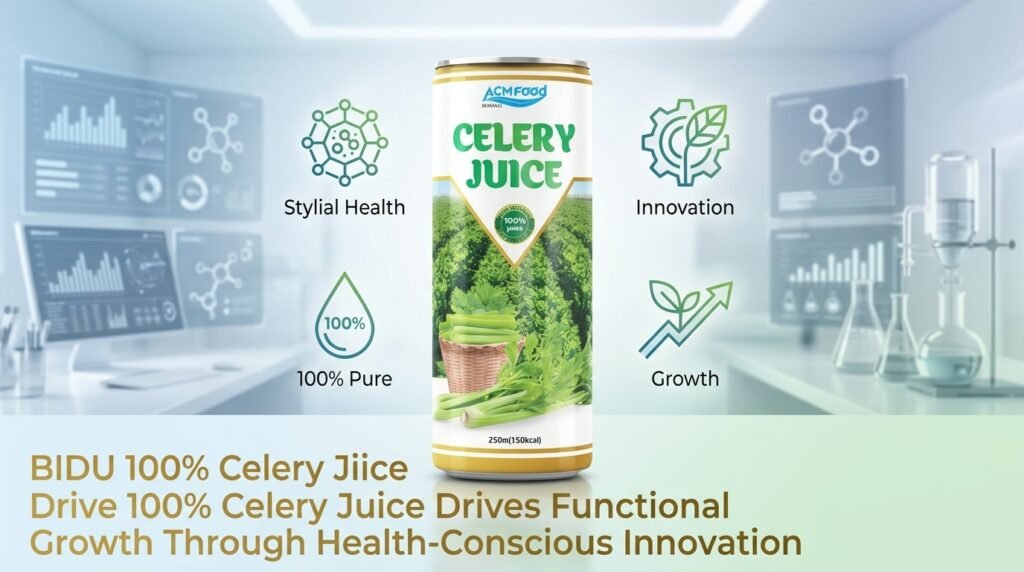
The global shift toward preventive health has catapulted functional vegetable juices from niche to mainstream. Amid this wave, 250ml 100% Juice Fresh Vegetable Celery Juice Drink emerges as a compelling case study in how simple, clean-label ingredients can capture the modern consumer’s attention.
This analysis explores the trajectory of functional celery juice within the broader functional beverage market, drawing on data from Innova Market Insights and Mordor Intelligence. It also examines the strategic implications for manufacturers, distributors, and private-label buyers looking to capitalize on this trend.
Contents
- 1 Rising Demand for Functional Vegetable Juices Reshapes the Beverage Landscape
- 2 Health and Wellness Trends Fueling Category Expansion
- 3 Unpacking the Product Benefits and Nutritional Value for B2B Audiences
- 4 Market Growth and Global Expansion Opportunities
- 5 Strategic Insights for Distributors and Private-Label Buyers
- 6 Conclusion: Celery Juice as a Pillar of Modern Healthy Living
- 7 Frequently Asked Questions
- 7.1 1. What makes functional celery juice different from regular celery juice?
- 7.2 2. Can this product be used as a base for new functional beverage lines?
- 7.3 3. What distribution channels are best for celery juice?
- 7.4 4. How does the shelf life compare to fresh-pressed juice?
- 7.5 5. What certifications are typically required for export to Europe or the Middle East?
- 7.6 6. Is private labeling possible with small minimum order quantities?
Rising Demand for Functional Vegetable Juices Reshapes the Beverage Landscape
The global shift toward preventive health has catapulted functional vegetable juices from niche to mainstream. Amid this wave, 250ml 100% Juice Fresh Vegetable Celery Juice Drink emerges as a compelling case study in how simple, clean-label ingredients can capture the modern consumer’s attention. Celery, long praised for its anti-inflammatory properties and hydration benefits, now anchors a product that sits at the intersection of wellness and convenience.
This analysis explores the trajectory of functional celery juice within the broader functional beverage market, drawing on data from Innova Market Insights and Mordor Intelligence. It also examines the strategic implications for manufacturers, distributors, and private-label buyers looking to capitalize on this trend.
Why Celery Juice Became a Wellness Staple
Celery juice’s rise is not accidental. Its natural sodium and potassium content support electrolyte balance, while antioxidants like apigenin reduce oxidative stress. For consumers seeking a single-ingredient, high-nutrient drink, this product offers a transparent solution.
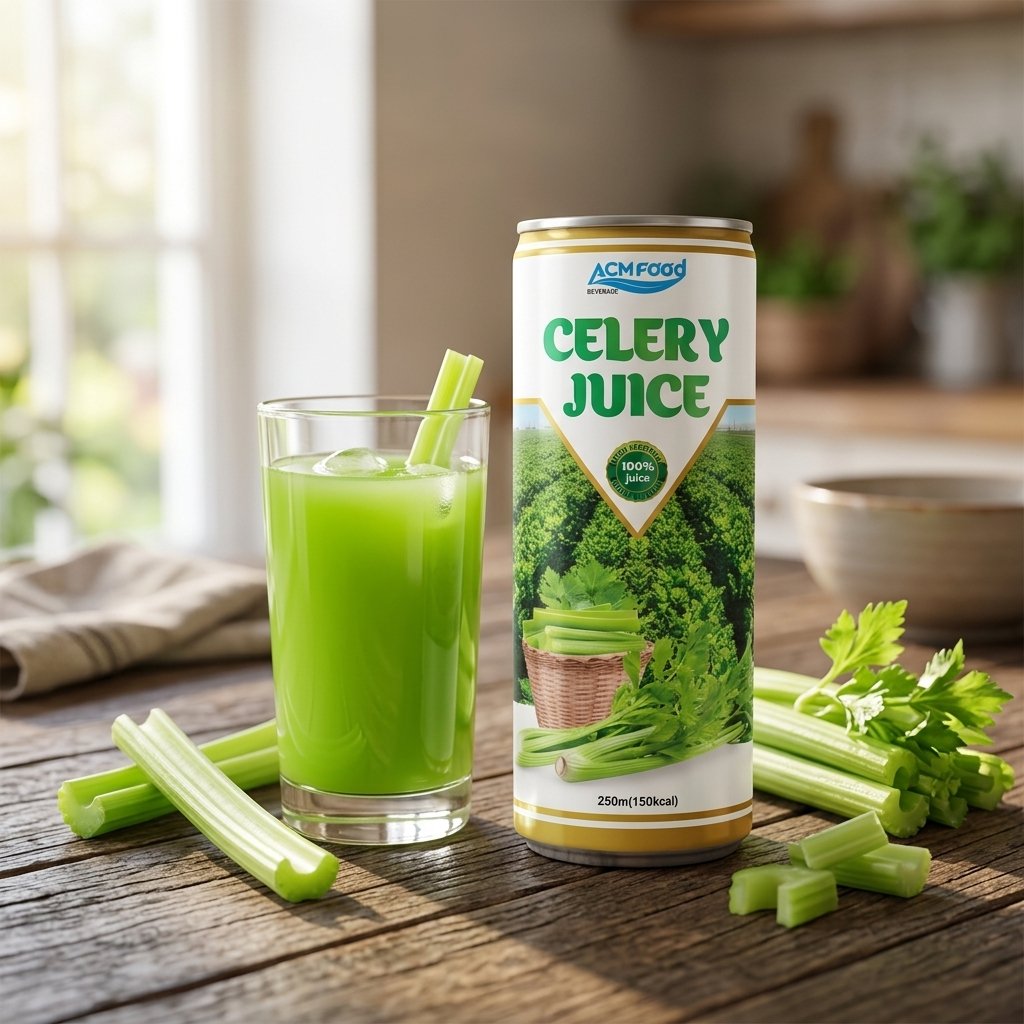
Market reports indicate that the vegetable juice segment grew by 8.3% in 2023, outpacing fruit juices. The celery juice drink fits perfectly into this trajectory, providing a low-sugar, functional alternative to sugary beverages.
Health and Wellness Trends Fueling Category Expansion
Consumer behavior in the beverage aisle has shifted dramatically. Shoppers now scan labels for sugar content, artificial additives, and functional claims. A 2023 survey by NielsenIQ revealed that 67% of consumers consider ‘natural ingredients’ a top priority. Functional celery juice satisfies these demands with a single-ingredient formulation.
The product’s positioning as a 100% juice without added water or sugar aligns with the clean-label movement. This is not just a trend but a structural change in purchasing habits. Distributors who stock such products often see higher shelf turnover and premium price acceptance.
Celery Juice in the Broader Functional Beverage Ecosystem
While many functional beverages rely on synthetic vitamins or herbal extracts, celery juice offers inherent functional benefits. It is naturally rich in vitamin K, folate, and potassium. This positions it as a daily wellness ritual rather than a occasional supplement.
Commercial buyers should note that this product’s simplicity reduces formulation complexity, making it an attractive candidate for private-label programs. For a distributor evaluating new SKUs, the low ingredient risk is a significant advantage.
Unpacking the Product Benefits and Nutritional Value for B2B Audiences
For business partners—from importers to retail chains—understanding the nutritional profile of functional celery juice is essential. Each 250ml serving delivers approximately 45 calories, 2g of dietary fiber, and 200mg of sodium—ideal for post-workout hydration or daily detox regimens.
The product’s heat-treatment process ensures shelf stability without compromising nutrient integrity. This is critical for export logistics, as the product can endure longer transit times without refrigeration. For companies targeting the Middle East or Asia, where fresh vegetable juice is less accessible, this offers a ready-to-drink solution that maintains freshness.
Manufacturers can also leverage this base formula for custom blends. Adding ginger, turmeric, or apple can create derivative products without overhauling production lines. This flexibility is a key selling point for OEM partners.
Market Growth and Global Expansion Opportunities
>
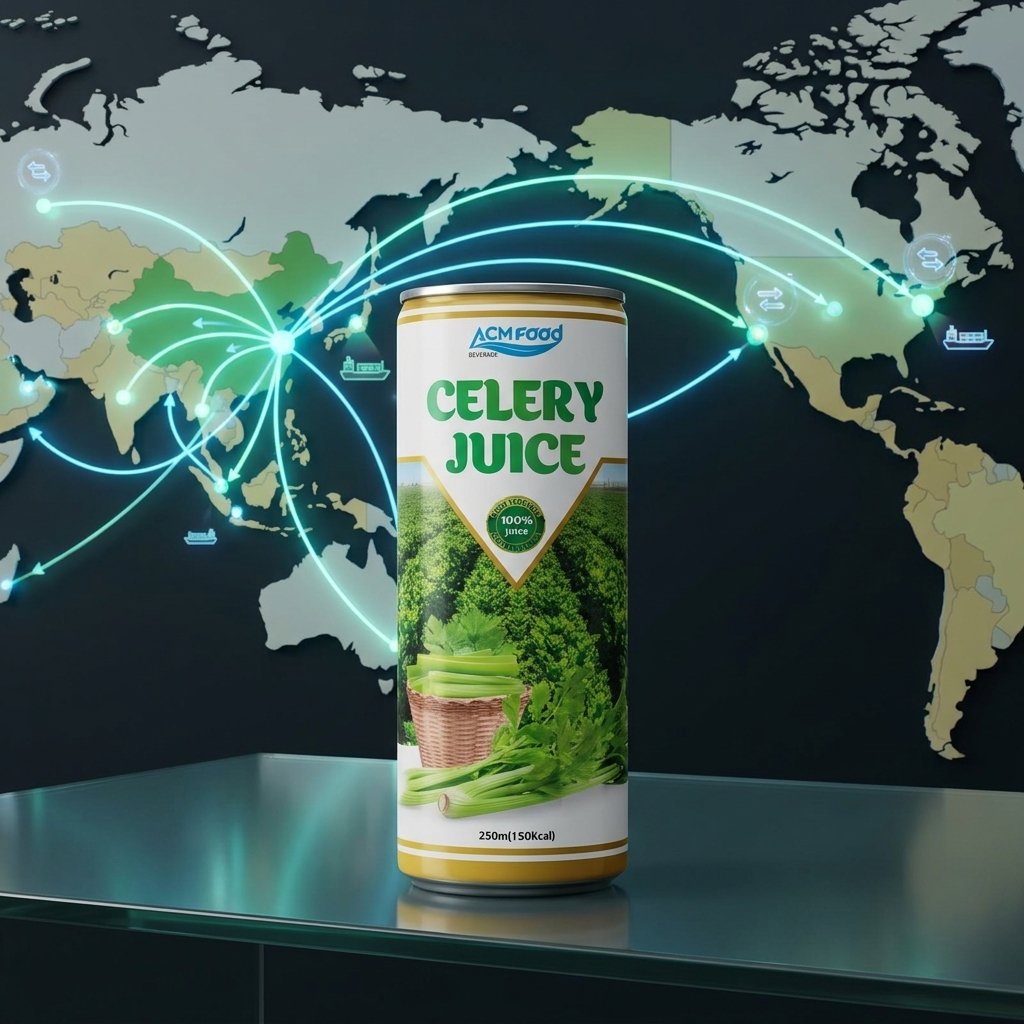
The functional juice market is projected to reach $95 billion by 2028, with vegetable-based variants capturing an increasing share. North America and Europe remain largest markets, but the fastest growth is in Asia-Pacific, driven by rising health awareness and disposable income.
Exporting a product like this requires careful attention to labeling and regulatory compliance. In the EU, the product must meet the Juice Directive’s requirements; in the US, FDA regulations for ‘100% juice’ labeling apply. Working with an experienced manufacturer who understands these standards can accelerate market entry.
For potential distributors, the fresh fruit juice category offers a complementary lineup, while sparkling water drink options can address the carbonated segment of health-conscious consumers.
Strategic Insights for Distributors and Private-Label Buyers
Adding a celery juice product to a portfolio is not just about following a trend—it’s about addressing a structural shift in consumer preferences. The product’s low MOQ and flexible packaging options (250ml can, bottle) allow buyers to test markets with minimized risk.
For private-label clients, customization can extend beyond flavor. Packaging design, label claims (e.g., ‘Keto-friendly,’ ‘Paleo’), and even brix adjustments are feasible. The key is partnering with a manufacturer that offers R&D support and sample development—a service that many OEMs provide to shorten time-to-market.
As a strategic buyer, you should request certificates of analysis and allergen statements early. This due diligence ensures that the product aligns with your target demographic’s expectations. The transparency of a single-ingredient juice simplifies this process compared to complex blends.
For distributors looking to differentiate their portfolio, evaluating a manufacturing partner’s agility in low-MOQ production has become a strategic imperative.
Conclusion: Celery Juice as a Pillar of Modern Healthy Living
The functional celery juice market is still in its early growth phase, presenting a first-mover advantage for discerning buyers. Products like the 250ml 100% Juice Fresh Vegetable Celery Juice Drink demonstrate how simplicity and functionality can coexist. As the beverage industry continues to shed artificial ingredients, celery juice stands out as a timeless, versatile solution.
Frequently Asked Questions
1. What makes functional celery juice different from regular celery juice?
Functional celery juice refers to products formulated to preserve natural nutrients, often with minimal processing. The 250ml 100% juice version retains the vegetable’s antioxidant profile without added sugars or preservatives.
2. Can this product be used as a base for new functional beverage lines?
Yes, OEM partners can easily blend it with other juices or functional ingredients like ginger, turmeric, or probiotics to create differentiated SKUs without starting from scratch.
3. What distribution channels are best for celery juice?
Health food stores, gyms, premium supermarkets, and online wellness platforms are primary channels. The product’s single-serve size is ideal for on-the-go consumption and subscription box models.
4. How does the shelf life compare to fresh-pressed juice?
Thanks to thermal processing, this product offers a 12–18 month ambient shelf life, reducing waste and simplifying logistics for international shipments.
5. What certifications are typically required for export to Europe or the Middle East?
Common requirements include ISO 22000, HACCP, Halal certification, and EU organic if applicable. Many Asian manufacturers already hold these certifications for their 100% juice products.
6. Is private labeling possible with small minimum order quantities?
Many OEM suppliers offer MOQs as low as 1,000 units for trial runs. This allows buyers to test the functional celery juice category with limited financial exposure.