


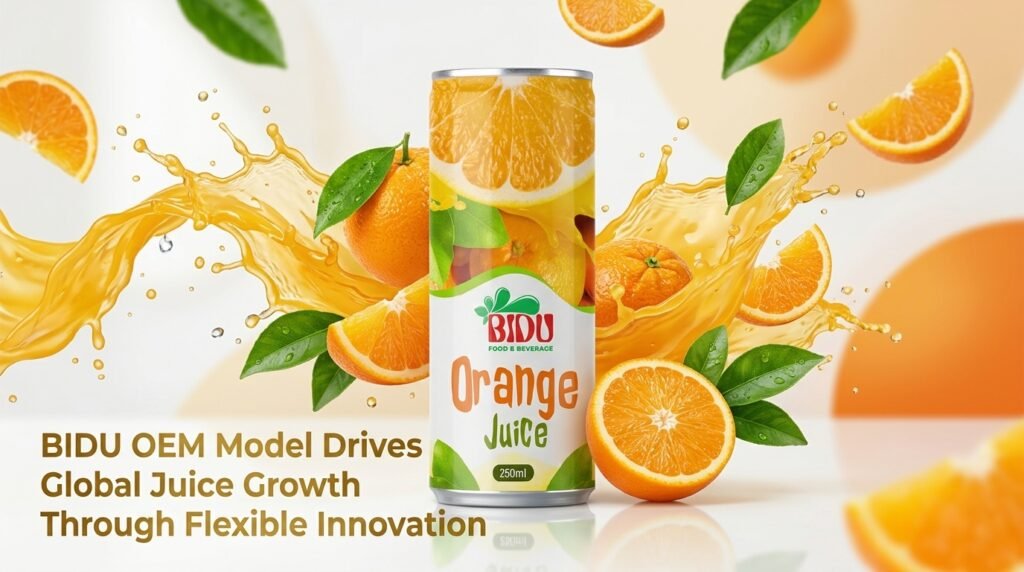
Global juice brands increasingly turn to OEM partners for speed and customization. The 250ml BIDU Orange Juice exemplifies how flexible manufacturing captures market share.
Understanding OEM strategies is now critical for distributors and importers seeking competitive advantage in the beverage sector.
Contents
- 1 The Rise of OEM in the Global Beverage Industry
- 2 BIDU Orange Juice: A Case Study in OEM Excellence
- 3 Tropical Fruit Juice Market Trends and Clean Label Demand
- 4 OEM Partnerships: Navigating Quality, Certification, and Export
- 5 The Future of Juice Manufacturing: R&D and Customization
- 6 Frequently Asked Questions
- 6.1 How does OEM juice manufacturing benefit small distributors?
- 6.2 What certifications are essential for juice export to the EU?
- 6.3 Can I customize sweetness and vitamin content in BIDU Orange Juice?
- 6.4 What is the typical lead time for OEM juice orders?
- 6.5 How does ACM FOOD ensure consistent quality across large batches?
- 6.6 Which markets are most promising for private-label tropical juices?
The Rise of OEM in the Global Beverage Industry
OEM juice manufacturing has grown over 15% annually in Vietnam. Producers like ACM FOOD leverage advanced lines to serve international brands.
BIDU Orange Juice demonstrates this shift toward private-label agility.
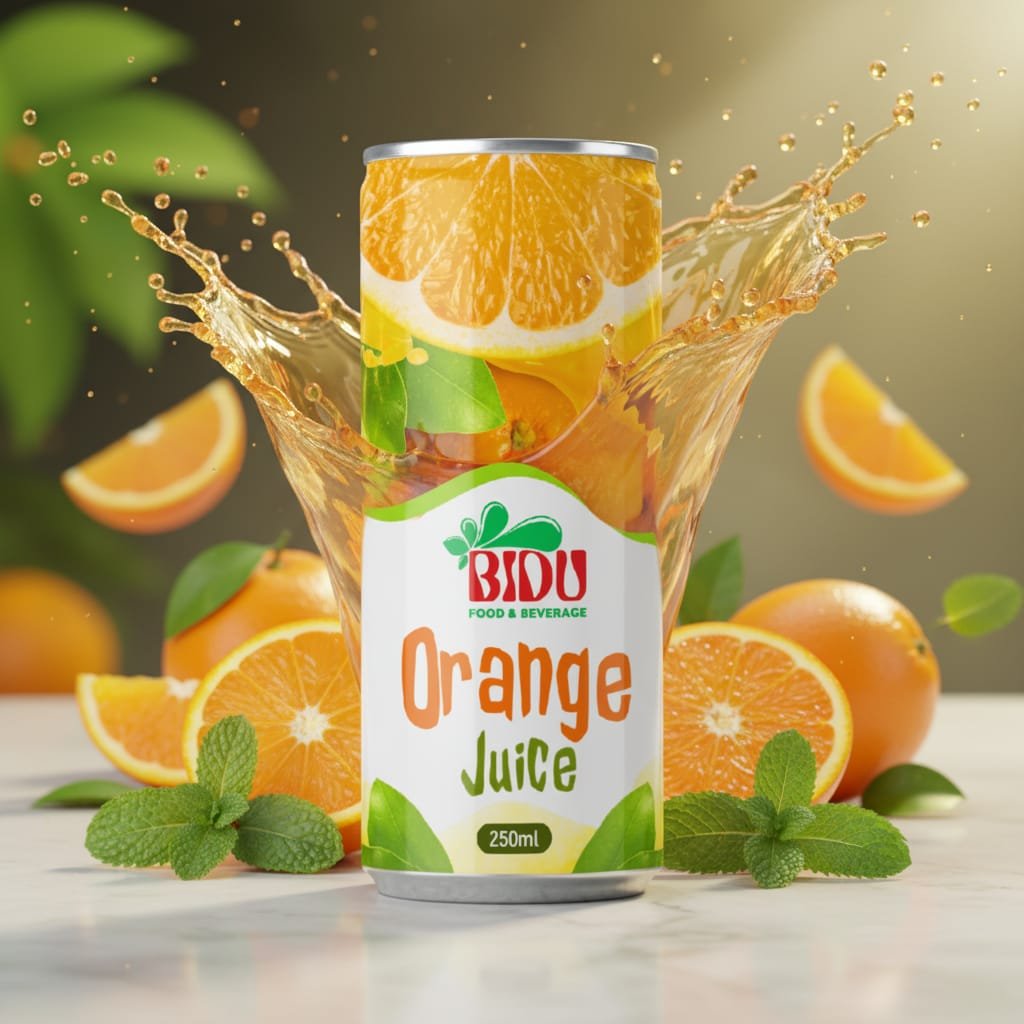
For illustrative purposes only
Advantages of OEM for Brands and Distributors
Flexibility allows small MOQs and rapid formulation changes. Importers gain entry to premium segments without heavy capital.
Quality control meets FSSC and ISO standards across all production stages.
BIDU Orange Juice: A Case Study in OEM Excellence
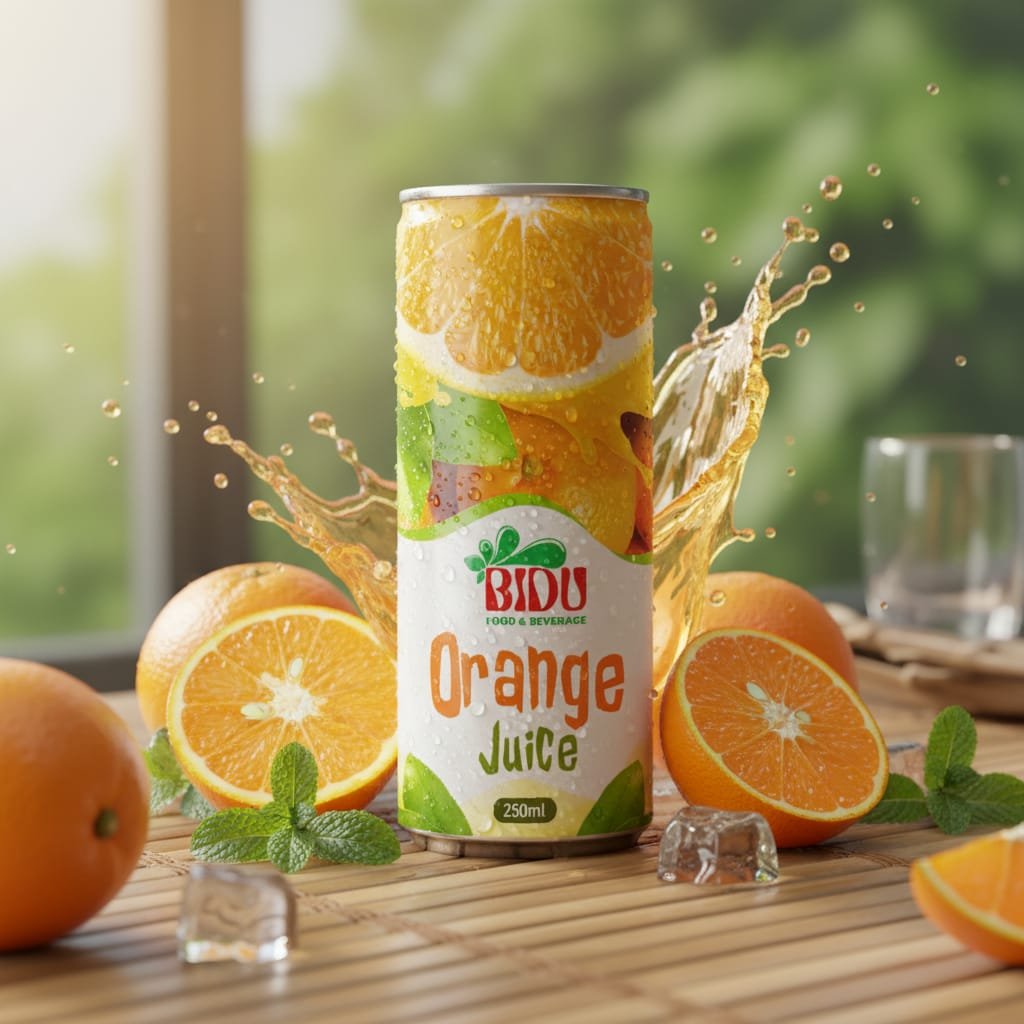
Made from pure tropical oranges, this 250ml BIDU Orange Juice offers natural sweetness and zero additives. It reflects clean-label trends demanded by health-conscious consumers.
Private-label partners can customize sweetness, packaging, and branding easily.
Tropical Fruit Juice Market Trends and Clean Label Demand
Consumers seek transparency in ingredients. ACM FOOD’s fresh fruit juice lines meet this with minimal processing.
Market data shows 23% annual growth for functional juices in Asia-Pacific.
Export Certifications as Market Access
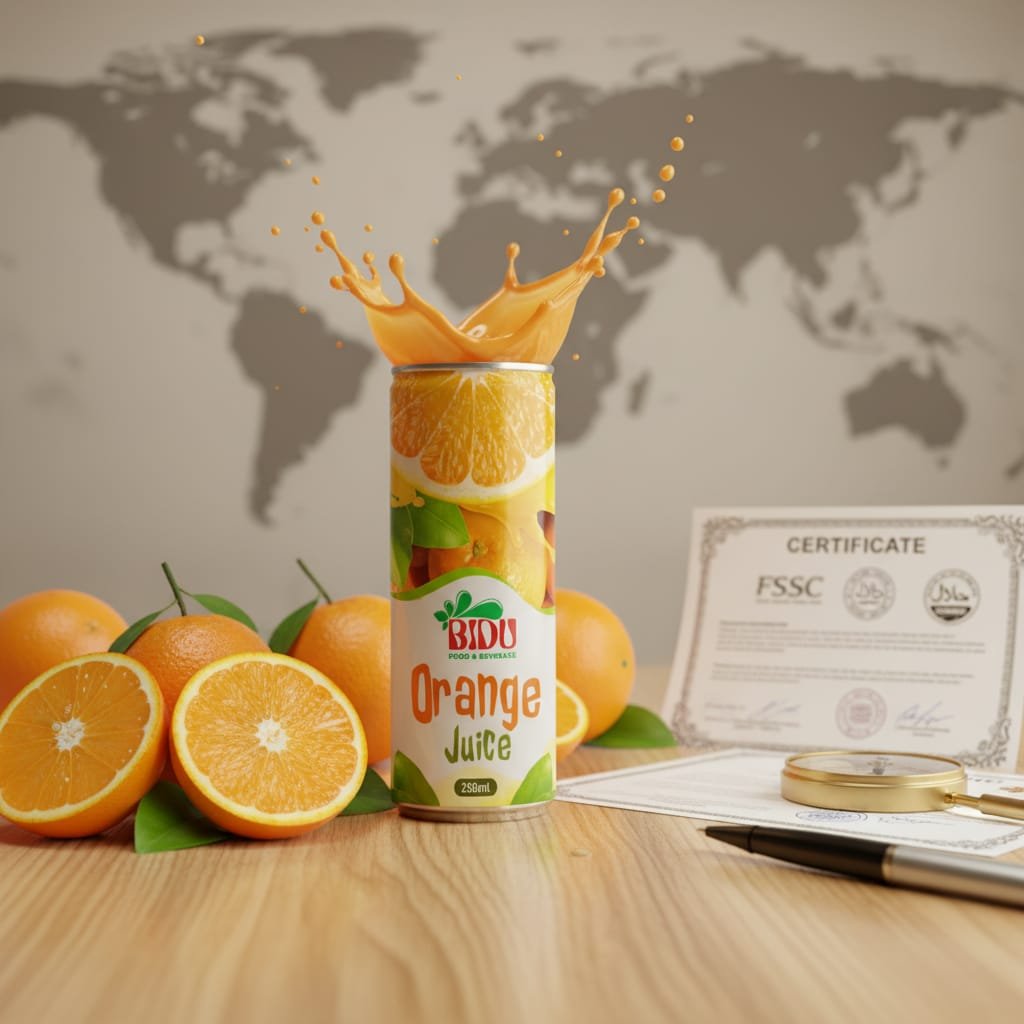
USDA Organic, Halal, and Kosher certifications open doors to US, EU, and Middle East markets. ACM FOOD holds all major credentials.
Its sparkling water portfolio complements juice offerings for full-line buyers.
B2B clients value traceable supply chains. ACM FOOD’s factory in Cu Chi District operates under strict BSCI and FSSC 22000 systems.
Monthly capacity exceeds 300 containers, ensuring reliable volume for global contracts.
The Future of Juice Manufacturing: R&D and Customization
Product development includes new flavor blends and functional boosts. ACM FOOD’s R&D team creates prototypes within weeks.
Sampling programs let distributors test market viability before committing to large orders.
Low MOQ options reduce risk for new entrants exploring organic or functional niches.
Frequently Asked Questions
How does OEM juice manufacturing benefit small distributors?
It gives access to professional production without factory investment. Small runs become profitable with flexible MOQ.
What certifications are essential for juice export to the EU?
FSSC 22000, Organic, and Halal are top requirements. ACM FOOD provides full documentation for smooth customs clearance.
Can I customize sweetness and vitamin content in BIDU Orange Juice?
Yes. ACM FOOD’s R&D team adjusts formulations per client specifications, including sugar levels and added nutrients.
What is the typical lead time for OEM juice orders?
Lead times range from 25 to 45 days depending on volume and packaging complexity. Rush orders can be arranged.
How does ACM FOOD ensure consistent quality across large batches?
Automated lines with in-line sensors monitor pH, brix, and temperature. Third-party lab tests verify each shipment.
Which markets are most promising for private-label tropical juices?
North America, Europe, and the Middle East show high demand for exotic flavors and clean-label claims.