


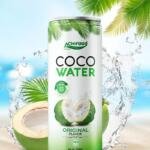
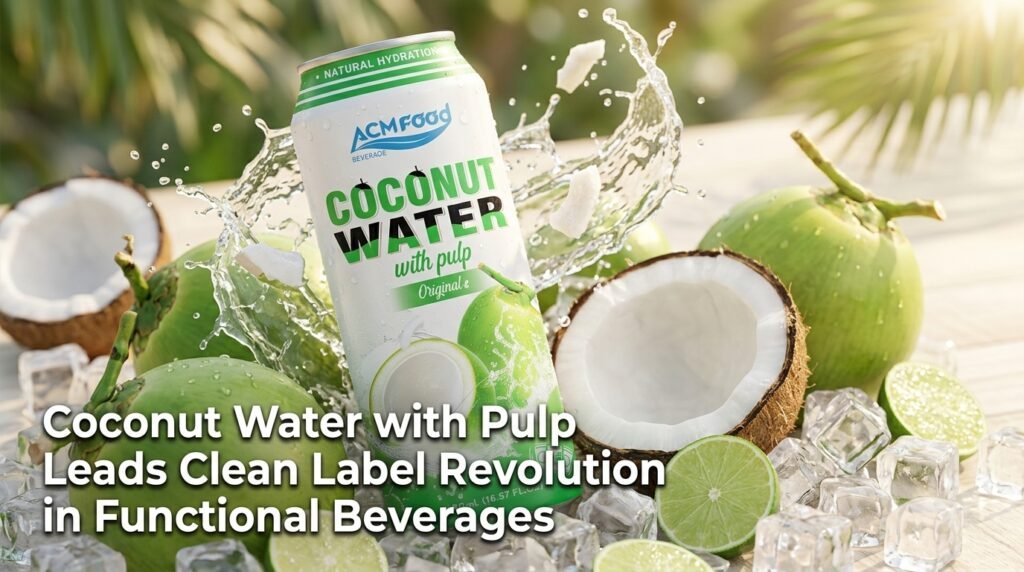
Coconut water with pulp is redefining what clean label means in the functional beverage category. As consumers reject artificial additives, natural hydrators with visible fruit content are capturing premium shelf space. This shift is not merely a trend but a structural change in how hydration products are formulated and marketed globally. For OEM suppliers, understanding the clean label imperative is now essential for growth.
The 500ml can format offers convenience without compromising on natural quality. ACM FOOD’s integrated manufacturing ecosystem enables brands to launch differentiated products quickly. By combining traditional coconut water with nutrient-rich pulp, this product meets both health goals and taste expectations. The convergence of clean label demand and scalable OEM production creates a unique window of opportunity for beverage companies worldwide.
Contents
- 1 The Rise of Clean Label in Hydration
- 2 OEM Flexibility Meets Consumer Demand
- 3 Global Market Trends Favoring Coconut Water with Pulp
- 4 Strategic Implications for B2B Buyers
- 5 FAQ – Clean Label Coconut Water with Pulp
- 5.1 What makes coconut water with pulp a clean label product?
- 5.2 How does pulp affect the shelf life compared to clear coconut water?
- 5.3 Which markets show highest demand for coconut water with pulp?
- 5.4 What OEM customization options are available for this product?
- 5.5 How does ACM FOOD ensure consistent pulp distribution in cans?
The Rise of Clean Label in Hydration
Coconut water with pulp is emerging as a cornerstone of the clean label movement. Consumers now demand transparency in every sip. This trend reshapes the functional beverage industry, prioritizing natural ingredients over artificial additives.
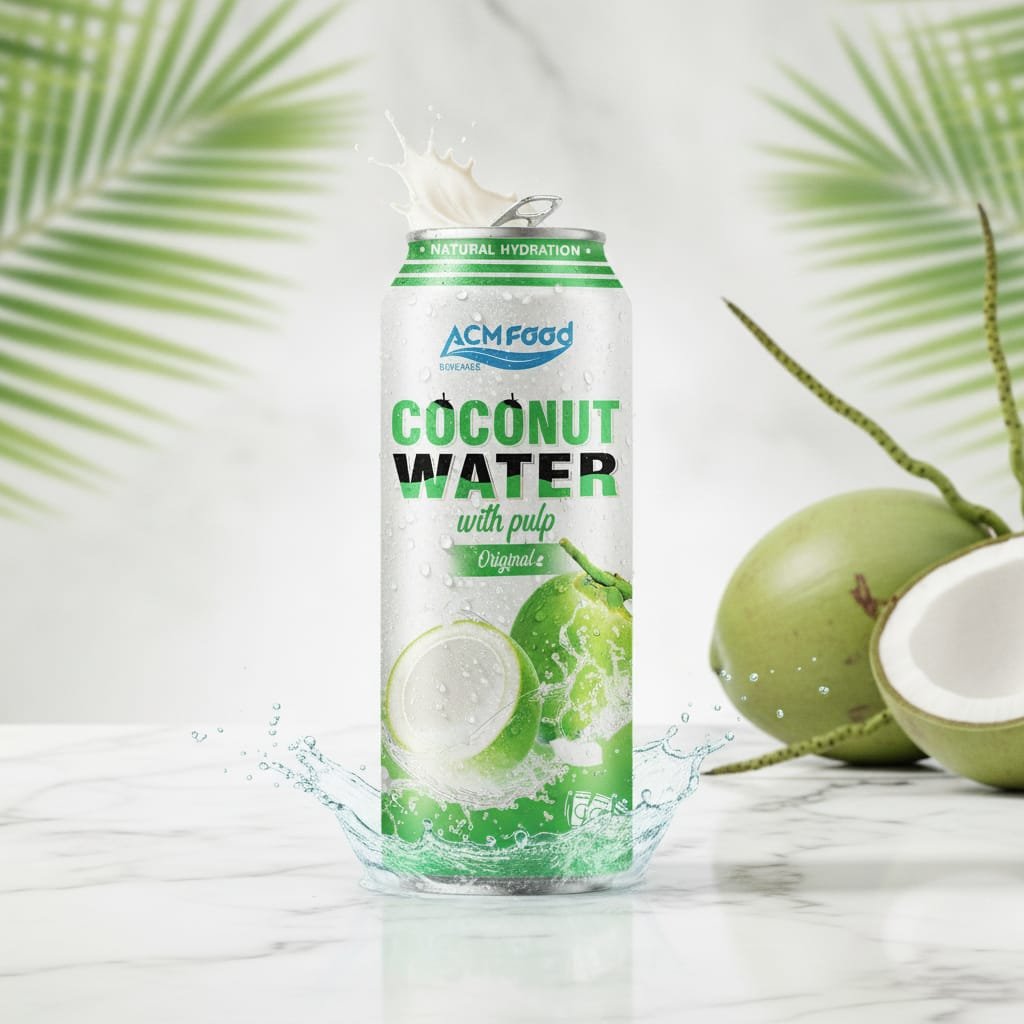
Market data from 2024 shows a 23% increase in search volume for ‘clean label hydration’. Beverage brands are reformulating portfolios to meet this demand. The 500ml Cans Original Coconut Water with Pulp exemplifies this shift perfectly.
Why Pulp Matters in Clean Label
The inclusion of pulp adds natural texture and fiber. Unlike processed drinks, this product retains the original coconut flesh. This aligns with the ‘whole food’ philosophy that drives clean label acceptance.
Functional benefits go beyond taste. Coconut pulp contains medium-chain triglycerides (MCTs) that support sustained energy. For OEM buyers, this creates a premium positioning opportunity in the exploding functional water segment.
OEM Flexibility Meets Consumer Demand
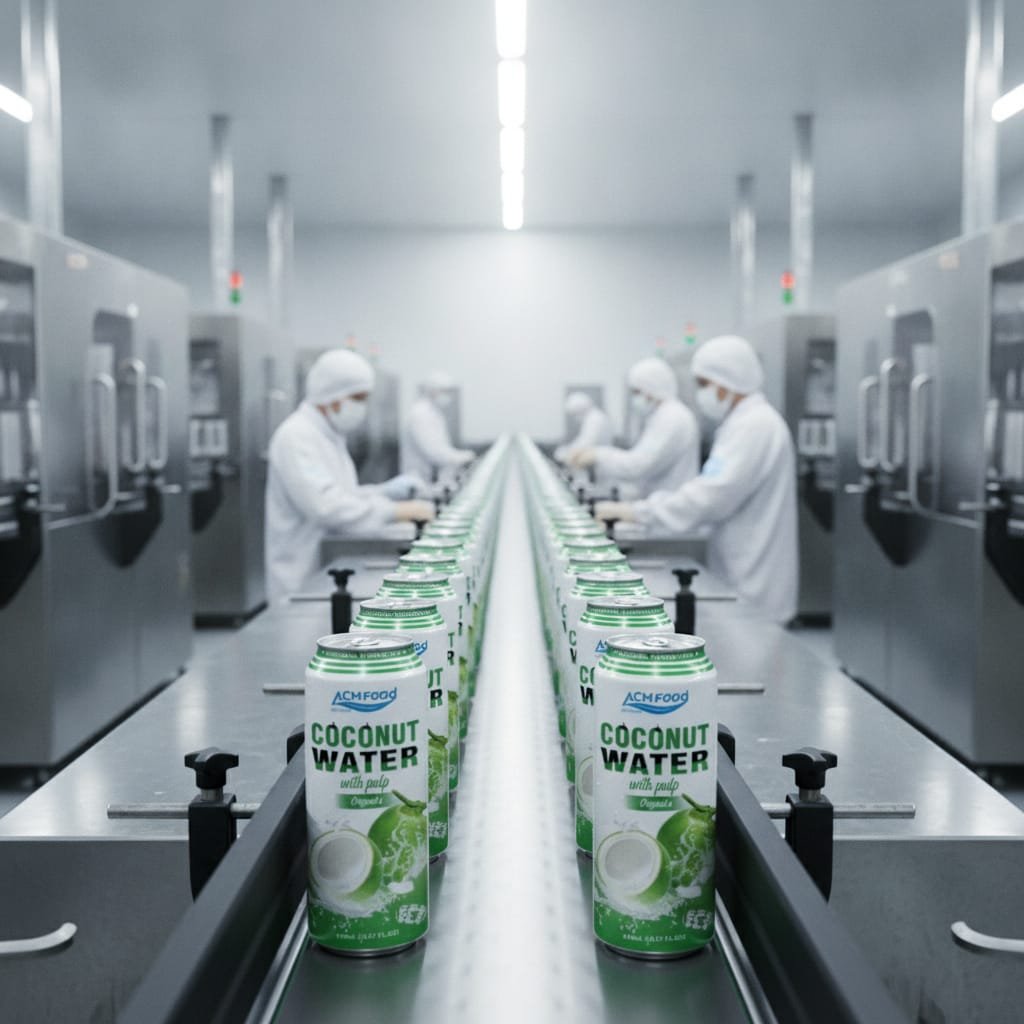
Producing clean label beverages requires manufacturing agility. The coconut water with pulp offered by BIDU Beverage demonstrates how OEM partnerships can accelerate innovation. With an integrated factory equipped with 10+ automated lines, ACM FOOD provides scalable solutions.
Private label brands can customize sweetness, pulp percentage, and packaging. This flexibility is critical for entering regional markets like the US, EU, and Middle East. Certifications including USDA Organic and HALAL ensure compliance across diverse regulatory environments.
For illustrative purposes only
Packaging as a Clean Label Statement
The 500ml can itself communicates freshness and sustainability. Aluminum preserves the natural flavor without preservatives. For distributors, this packaging reduces shelf-life concerns while reinforcing the clean label promise.
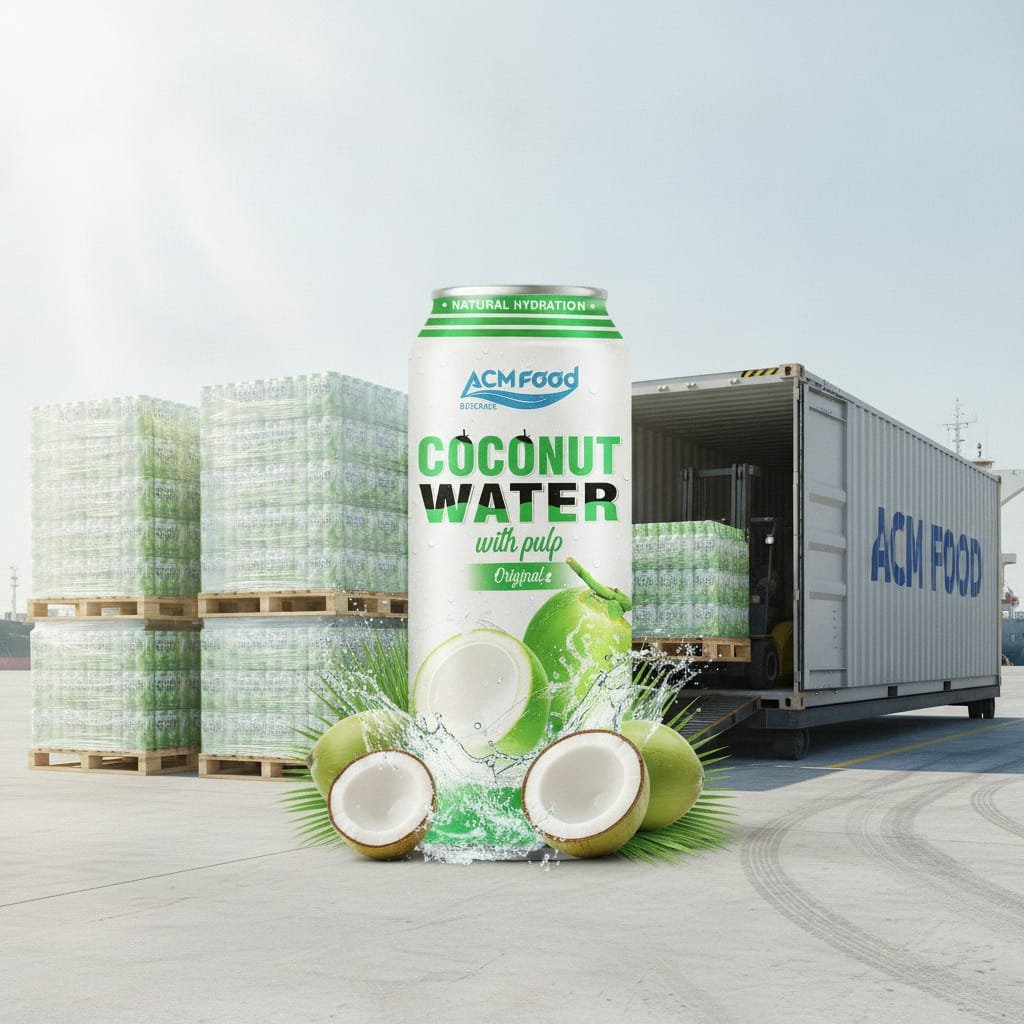
Minimum order quantities are flexible, allowing new brands to test markets. This low-barrier entry model has enabled over 300 containers of monthly export capacity. Such volume proves the scalability of clean label production at ACM FOOD’s facility.
Global Market Trends Favoring Coconut Water with Pulp
The global coconut water market is projected to reach $8.2 billion by 2027. The pulp variant commands a 15% price premium over standard coconut water. This margin attracts both startups and established beverage houses.
Retailers in Europe are actively seeking shelf-stable, natural hydrators. The fresh coconut water ACMFOOD category shows strong cross-category appeal. Meanwhile, the milk drink segment integrating coconut water opens new usage occasions like post-workout recovery and meal replacements.
Export logistics are streamlined through Ho Chi Minh City ports. ACM FOOD’s quality management system FSSC 22000 ensures consistent product safety across shipments. Buyers can leverage this supply chain for reliable global distribution.
For illustrative purposes only
Strategic Implications for B2B Buyers
For distributors eyeing the functional beverage space, clean label coconut water with pulp offers a proven entry point. The product’s natural electrolytes, potassium, and antioxidants address health-conscious demographics without marketing complexity.
Investing in OEM partnerships now allows brands to capture shelf space before category saturation. The private label route requires minimal upfront investment while building dedicated consumer loyalty. ACM FOOD provides R&D sampling with rapid turnaround – a competitive advantage in trend-driven markets.
Regulatory compliance is simplified through existing certifications. From FDA registration to Middle East HALAL labels, every export shipment meets local standards. This reduces time-to-market for new product launches.
FAQ – Clean Label Coconut Water with Pulp
What makes coconut water with pulp a clean label product?
It contains only natural ingredients – coconut water and coconut meat. No added sugars, preservatives, or artificial flavors qualify it as clean label.
How does pulp affect the shelf life compared to clear coconut water?
With proper canning and aseptic processing, shelf life reaches 12-18 months. The pulp does not compromise stability when production follows FSSC 22000 standards.
Which markets show highest demand for coconut water with pulp?
North America and Western Europe lead growth, followed by the Middle East and Asia-Pacific. The functional hydration trend drives adoption in sports nutrition and wellness segments.
What OEM customization options are available for this product?
Buyers can adjust Brix (sugar content), pulp percentage, can design, and labeling. Minimum order quantities start at one full container for standard specifications.
How does ACM FOOD ensure consistent pulp distribution in cans?
Advanced homogenization technology and quality checks maintain uniform pulp particles. Each batch is tested for texture and sedimentation before release.