


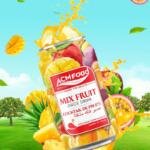
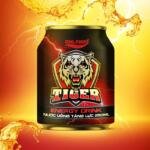
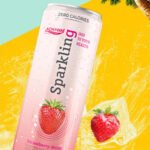
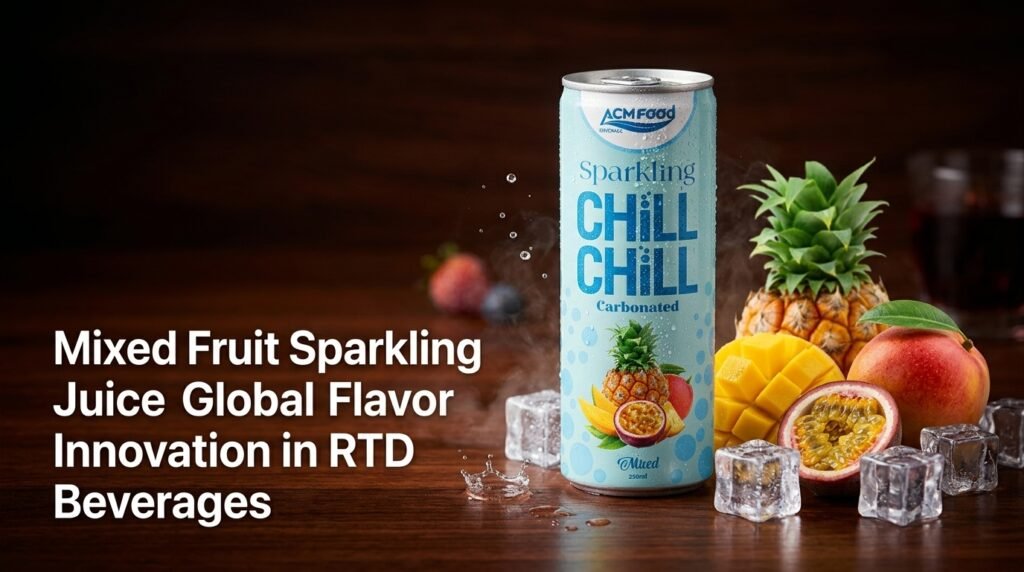
Mixed fruit sparkling juice has emerged as a powerful vehicle for flavor innovation in the rapidly evolving ready-to-drink (RTD) market. This category combines the natural appeal of fruit blends with the effervescence of sparkling water, creating a premium sensory experience. The specific product, Mixed Fruit Sparkling Juice – 250ml Alu-can for Export, exemplifies how manufacturers are leveraging diverse tropical flavors to differentiate their offerings. This approach aligns with growing consumer demand for adventurous yet natural taste profiles.
Flavor innovation is no longer just about adding new fruits. It involves creating complex layers of sweetness, acidity, and carbonation that mimic artisanal beverages. The mixed fruit sparkling juice segment has become a playground for R&D teams, who experiment with blends like mango-passionfruit, berry-citrus, and tropical medleys. These combinations offer a refreshing alternative to sugary sodas while delivering authentic fruit flavor. For brand owners and distributors, this represents a significant opportunity to capture health-conscious consumers seeking indulgence without compromise.
Contents
- 1 The Rise of Mixed Fruit Sparkling Juice in Flavor Innovation
- 2 Market Trends Fueling the Mixed Fruit Sparkling Juice Boom
- 3 OEM/ODM Flexibility: How Manufacturers Are Innovating with Mixed Fruits
- 4 Export and Logistics: Bringing Mixed Fruit Sparkling Juice to Global Markets
- 5 Strategic Insights for Buyers and Distributors
- 6 Frequently Asked Questions About Mixed Fruit Sparkling Juice Trends
- 6.1 How is mixed fruit sparkling juice driving flavor innovation in the non-alcoholic market?
- 6.2 What export considerations are unique to sparkling juice products?
- 6.3 Can I develop a custom mixed fruit blend for my brand?
- 6.4 What are the market growth projections for mixed fruit sparkling juice?
- 6.5 How do I choose the right packaging format for export?
The Rise of Mixed Fruit Sparkling Juice in Flavor Innovation
Mixed fruit sparkling juice has emerged as a powerful vehicle for flavor innovation in the rapidly evolving ready-to-drink (RTD) market. This category combines the natural appeal of fruit blends with the effervescence of sparkling water, creating a premium sensory experience. The specific product, Mixed Fruit Sparkling Juice – 250ml Alu-can for Export, exemplifies how manufacturers are leveraging diverse tropical flavors to differentiate their offerings. This approach aligns with growing consumer demand for adventurous yet natural taste profiles.
Flavor innovation is no longer just about adding new fruits. It involves creating complex layers of sweetness, acidity, and carbonation that mimic artisanal beverages. The mixed fruit sparkling juice segment has become a playground for R&D teams, who experiment with blends like mango-passionfruit, berry-citrus, and tropical medleys. These combinations offer a refreshing alternative to sugary sodas while delivering authentic fruit flavor. For brand owners and distributors, this represents a significant opportunity to capture health-conscious consumers seeking indulgence without compromise.
Market Trends Fueling the Mixed Fruit Sparkling Juice Boom
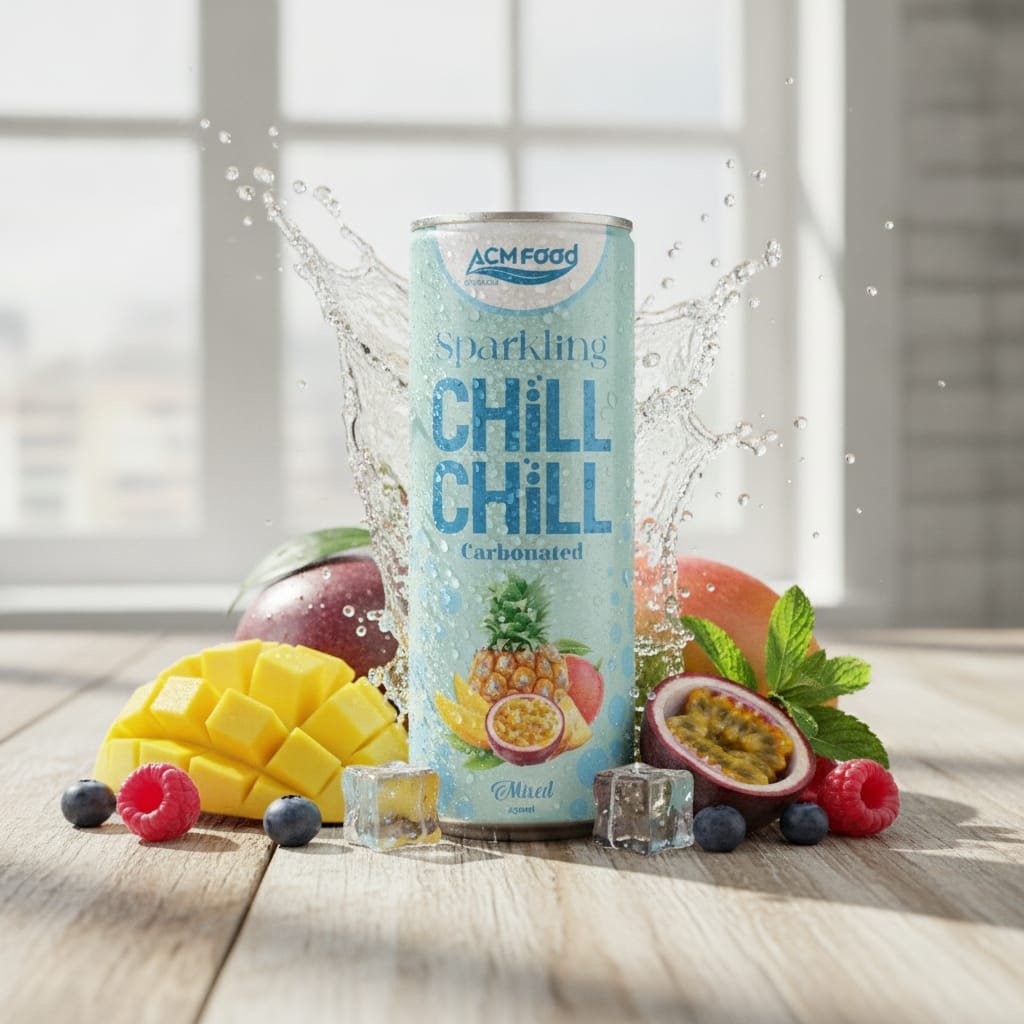
The global market for sparkling juices is expanding at a compound annual growth rate (CAGR) of 8%, driven by shifting preferences toward low-sugar, functional beverages. Mixed fruit variants hold a particular appeal because they provide a broader antioxidant profile and a more visually attractive product. According to industry analysts, the segment is expected to exceed $25 billion by 2028, with Southeast Asian manufacturers like those in Vietnam increasingly supplying export markets.
Consumer behavior data reveals that 62% of RTD buyers are willing to pay a premium for unique fruit blends. This trend is especially strong among Millennials and Gen Z, who prioritize exotic flavors over traditional cola or lemon-lime options. The mixed fruit sparkling juice category has thus become strategic for retailers looking to revitalize their beverage aisles. In response, OEM producers such as BIDU Beverage have invested in flexible production lines capable of handling complex flavor formulations.
Another key driver is the clean label movement. Consumers increasingly scrutinize ingredient lists, favoring products with no artificial colors or preservatives. Fresh fruit juice blends provide a natural base for sparkling drinks, appealing to those seeking transparency. This shift has prompted suppliers to develop concentrated fruit purées that maintain flavor integrity during carbonation. The result is a beverage category that satisfies both pleasure and wellness needs.
OEM/ODM Flexibility: How Manufacturers Are Innovating with Mixed Fruits
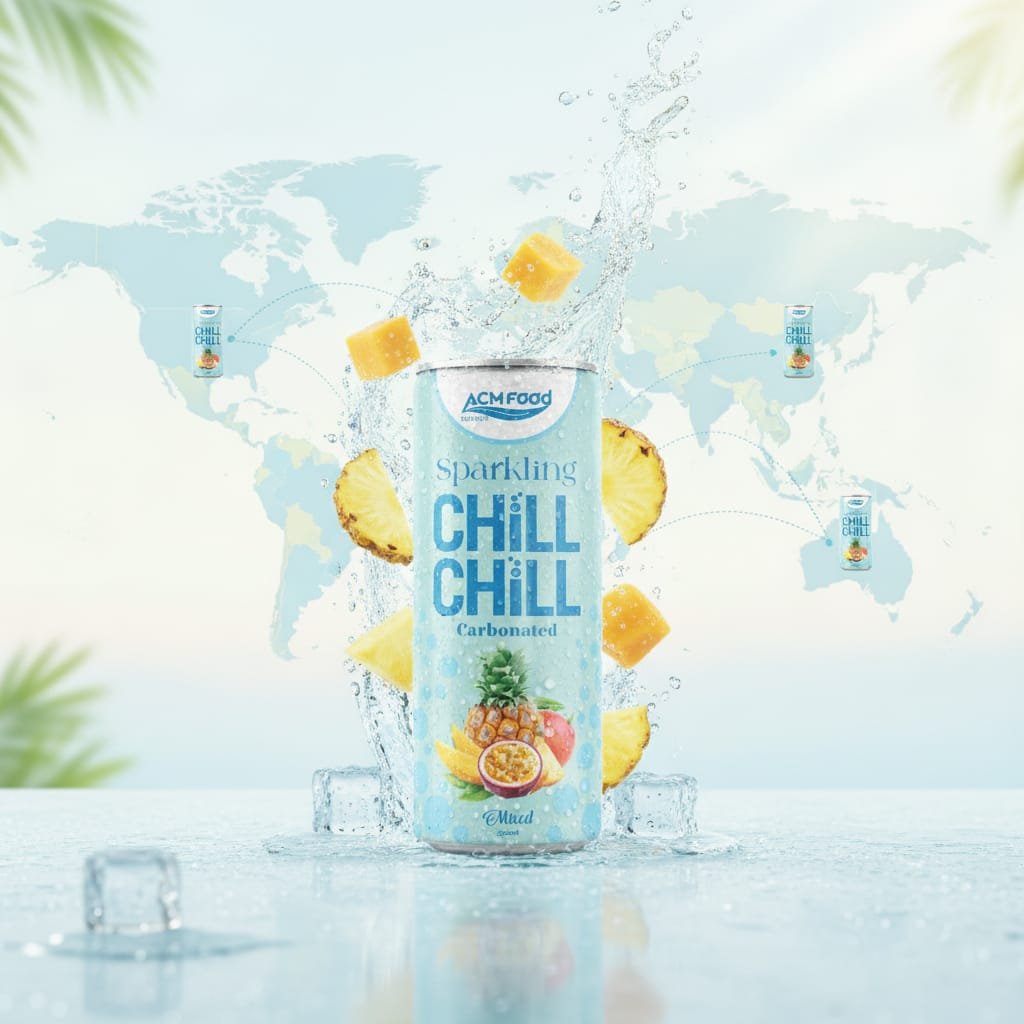
The success of mixed fruit sparkling juice hinges on the capability of manufacturing partners to customize recipes, packaging, and branding. OEM/ODM providers like ACM FOOD offer extensive R&D support, allowing clients to develop proprietary blends. For instance, the tangy-sweet profile of a sparkling water drink can be fine-tuned with tropical fruits such as guava, lychee, or dragon fruit, creating distinct market positioning.
Production agility is critical when introducing new flavors. Modern facilities equipped with multiple automated lines can switch between formulations quickly, minimizing downtime. This flexibility enables low minimum order quantities (MOQs) for pilot batches, allowing brands to test consumer response without excessive risk. ACM FOOD, for example, can produce as few as 10,000 cans per SKU during the trial phase, scaling up once demand is confirmed.
Beyond formulation, packaging innovation plays a role in flavor perception. The 250ml aluminum can used for this export product preserves carbonation and protects against light, ensuring the fruit flavors remain vibrant. Sleek cans, slim cans, and paper boxes are also available, giving brands the ability to tailor their presentation to specific retail channels. This level of customization is why many international beverage companies are turning to Vietnamese OEM partners.
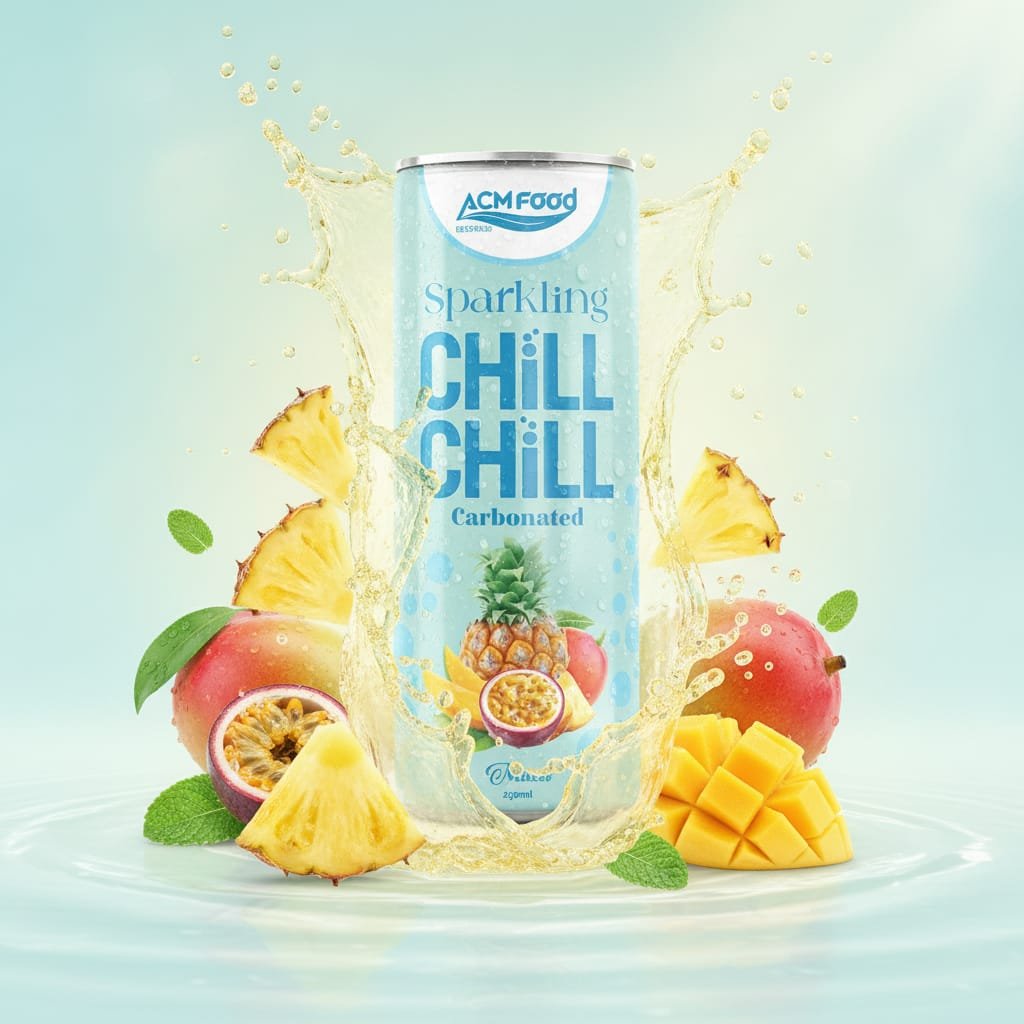
For illustrative purposes only
Export and Logistics: Bringing Mixed Fruit Sparkling Juice to Global Markets
Exporting mixed fruit sparkling juice requires meticulous planning to ensure product quality from factory to shelf. Vietnam has become a major hub for beverage exports, thanks to its strategic location, competitive labor costs, and adherence to international food safety standards. ACM FOOD’s factory in Cu Chi District operates under FSSC 22000, ISO, and BSCI certifications, meeting the requirements of the US, EU, and Middle Eastern markets.
Logistics challenges for sparkling juices include maintaining stable carbonation levels during transit. Producers use specialized filling technology that controls dissolved oxygen, coupled with aluminum cans that offer superior sealing compared to plastic. Sea freight from Ho Chi Minh City to major ports like Los Angeles or Rotterdam takes 15-25 days, during which temperature and pressure must be managed. ACM FOOD provides cold-chain options for sensitive formulations, though most mixed fruit sparkling juices have a shelf life of 12-18 months at ambient conditions.
Regulatory compliance is another layer. Each target market has specific labeling requirements (e.g., FDA for the US, EU Food Information Regulations). Manufacturers offer pre-approval samples and documentation support, including HALAL and KOSHER certifications where needed. For importers and distributors, partnering with a supplier that understands these nuances reduces time-to-market and legal risks. The Mixed Fruit Sparkling Juice – 250ml Alu-can for Export is designed with global distribution in mind, incorporating universal barcodes and multilingual label options.
Strategic Insights for Buyers and Distributors
When evaluating a mixed fruit sparkling juice partnership, consider the supplier’s track record in flavor development and export documentation. A manufacturer that can provide sensory evaluation reports, stability tests, and certificate of analysis for each batch is essential. Equally important is the ability to handle private labeling, where the product carries the buyer’s brand identity. Many OEM providers offer turnkey solutions from concept to container.
For wholesalers and retail chains, introducing a mixed fruit sparkling juice line can revitalize the non-alcoholic beverage segment. The product’s perceived value allows for higher margin pricing compared to standard sodas. Moreover, retailers can cross-merchandise the cans with beer or wine alternatives, targeting the growing sober-curious demographic. The compact 250ml format is ideal for impulse purchases and on-the-go consumption.
Distributors seeking to differentiate their portfolios should explore seasonal flavor campaigns. For instance, a summer promotion featuring mango-pineapple-sparkling juice can capitalize on warm-weather demand. The OEM partner’s ability to produce limited runs enables such tactical marketing. As noted by industry experts, the brands that succeed are those that treat flavor innovation as an ongoing process, not a one-time launch.
Frequently Asked Questions About Mixed Fruit Sparkling Juice Trends
How is mixed fruit sparkling juice driving flavor innovation in the non-alcoholic market?
Mixed fruit sparkling juice allows manufacturers to combine multiple fruit profiles, creating complex, layered flavors that appeal to adventurous consumers. This fuels innovation in the RTD sector as brands seek to stand out from traditional sodas.
What export considerations are unique to sparkling juice products?
Exporting requires attention to carbonation stability, packaging integrity, and regulatory compliance. Aluminum cans are preferred for their ability to preserve fizz and protect flavor. Suppliers must also provide certification documents for target markets.
Can I develop a custom mixed fruit blend for my brand?
Yes, OEM partners like ACM FOOD offer R&D services to create proprietary flavors. They can adjust sweetness, acidity, and carbonation levels to meet your specifications, with low MOQs for initial test runs.
What are the market growth projections for mixed fruit sparkling juice?
The global sparkling juice market is growing at 8% CAGR, with mixed fruit varieties seeing above-average demand. The segment is projected to exceed $25 billion by 2028, particularly strong in North America and Europe.
How do I choose the right packaging format for export?
Packaging depends on target market preferences and distribution channel. Aluminum cans (250ml, 330ml) are versatile for retail and vending. Paper boxes (1L) suit family consumption. OEM suppliers provide samples to test consumer acceptance.